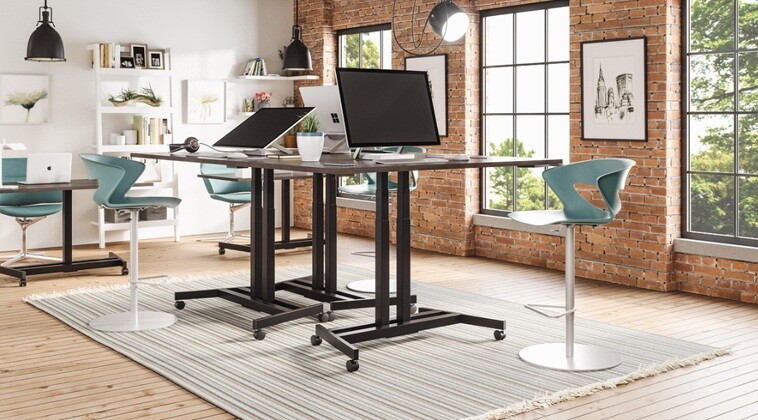
Today’s workplace isn’t what it used to be. Organizations everywhere are grappling with the need for flexibility, efficiency, and adaptability, and they’re finding answers in mobile solutions that genuinely transform how work gets done. Whether you’re walking through a bustling hospital, touring a manufacturing floor, navigating a university campus, or managing a corporate office, there’s something powerful about bringing technology and resources directly where they’re needed. Mobile options let professionals escape the confines of fixed workstations, creating workflows that actually respond to what’s happening right now.
The Evolution of Workplace Mobility
Workplace mobility has come a long way in the past twenty years, evolving from basic laptop carts into sophisticated systems that seamlessly integrate power, connectivity, and ergonomic design. Those early attempts at mobility often focused purely on getting equipment from point A to point B, completely missing the bigger picture of sustained functionality throughout long work periods. Modern mobile solutions have learned from those mistakes, incorporating smart power management systems that keep everything running smoothly across entire shifts or even longer. Today’s designs combine intelligent battery technologies with ergonomic features that actually support professionals who need to stand and move for hours at a time, transforming mobile options from “nice to have” conveniences into critical infrastructure.
Enhancing Healthcare Delivery Through Mobile Solutions
Healthcare settings make the most compelling case for mobile workflow transformation, where seconds can literally make the difference in patient outcomes and satisfaction. Mobile solutions put electronic health records, medication databases, and diagnostic tools right at the bedside, cutting out those time-consuming trips back and forth to nursing stations. This immediate information access leads to better decisions, fewer medication errors, and more meaningful time spent with patients instead of walking in the hallways. Real-time documentation, rather than the old “I’ll remember and write it down later” approach, dramatically boosts accuracy and helps facilities stay compliant with regulations. When delivering patient care across multiple rooms and units, a mobile workstation cart provides healthcare professionals with reliable access to critical systems throughout extended shifts. These mobile options also support collaborative care models beautifully, letting multidisciplinary teams access patient information simultaneously and coordinate treatment plans right at the point of care. Research backs this up too; studies show that comprehensive mobile strategies in healthcare can reduce documentation time by as much as forty percent while actually improving how thorough and accurate medical records are.
Optimizing Manufacturing and Warehouse Operations
Manufacturing and warehouse facilities face their own set of challenges that mobile solutions tackle remarkably well, especially in those sprawling operations with workstations scattered across massive floor plans. Mobile options keep quality control inspectors, inventory managers, and production supervisors connected to critical systems and data while they stay physically present where the action’s happening. That constant connectivity means issues get spotted and fixed immediately, stopping small problems before they snowball into expensive production delays or quality failures. Real-time data entry and system updates eliminate the frustrating lag that comes with paper-based processes or having to trek to a workstation periodically, resulting in inventory tracking and production reporting that actually reflects reality.
Empowering Educational Environments
Educational institutions, from elementary schools all the way through universities, are tapping into mobile solutions to create learning experiences that genuinely engage students and meet individual needs. Mobile options let educators bring technology directly to students, supporting collaborative projects, multimedia presentations, and personalized instruction without being limited by fixed computer labs. This flexibility makes differentiated instruction actually practical, where teachers can provide targeted help to individual students or small groups while still keeping an eye on the whole classroom. Libraries and media centers benefit from mobile solutions that turn traditional circulation desks into flexible service points that can move based on where patrons are and how the facility’s being used.
Streamlining Corporate and Professional Services
Corporate environments and professional services firms are discovering that mobile solutions dramatically enhance how teams collaborate, serve clients, and operate efficiently in ways that traditional office layouts just can’t match. Mobile options let teams quickly reconfigure workspaces for different projects, meetings, or collaborative sessions without the headaches and disruptions that come with hauling equipment between fixed locations. Client-facing professionals can roll comprehensive technology capabilities directly into conference rooms, delivering impressive presentations and pulling up real-time information without breaking the meeting’s rhythm. This flexibility supports agile work methodologies perfectly, where teams need to pivot quickly between different tasks and setups as project requirements evolve.
Key Considerations for Implementation Success
Successfully implementing mobile solutions goes way beyond just buying equipment and rolling it out across the facility. Power management sits at the top of the priority list, since mobile solutions absolutely must keep running reliably throughout entire work shifts without constant charging interruptions. Battery capacity, charging speed, and power consumption patterns should match actual usage, not just what looks good on paper. Ergonomic design becomes increasingly critical for mobile solutions that get heavy use throughout the day, handle placement, wheel quality, cable management, and height adjustability all play into whether users stay comfortable and safe.
Measuring Return on Investment and Continuous Improvement
Quantifying the benefits of mobile workflow transformation means establishing clear metrics and baseline measurements before implementation begins, so you can objectively assess improvements and calculate return on investment. Time, motion studies can document reductions in travel time, waiting periods, and redundant data entry, then translate those efficiency gains into hard numbers for cost savings and productivity improvements. Quality metrics like error rates, rework frequency, and compliance scores often show dramatic improvement with mobile implementations, though organizations need proper tracking mechanisms in place to capture these changes. Employee satisfaction surveys and turnover rates reveal the human side of mobile solutions, since improved working conditions and reduced frustration directly influence retention and morale.
Conclusion
Transforming workflows through mobile options represents something far bigger than a technological upgrade, it’s a fundamental reimagining of how work can and should happen in modern organizations. By bringing technology, information, and capabilities directly to the point of need, mobile solutions wipe out inefficiencies, enhance service quality, and empower professionals to perform at their absolute best. The benefits ripple across diverse industries and applications, from healthcare facilities where faster access to critical information literally saves lives, to manufacturing plants optimizing production through real-time visibility and control. Success requires thoughtful planning, genuine attention to user needs, and commitment to continuous improvement, but organizations that embrace comprehensive mobile strategies consistently see significant returns on their investments.
You may also like to read,