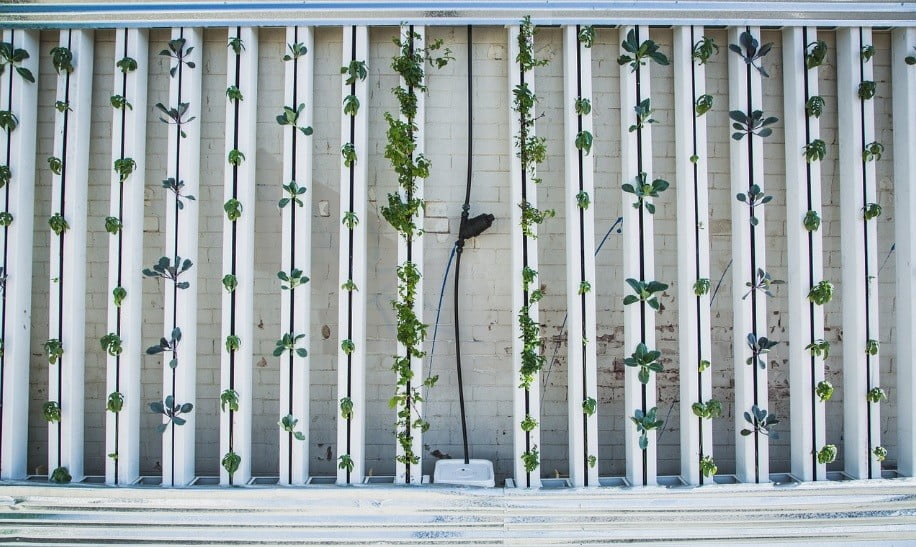
Urban farming is the growth and nurturing of animals or plants that provide food in the urban setting. This comes in a variety of forms from community gardens to window boxes.
There are many benefits to urban agriculture, both for the community and for the individual farmer.
Food Security
One of the largest individual benefits of growing food in an urban area is the increased food security. The cost of food seems to be constantly on the rise, especially when it comes to healthy foods such as fruits and vegetables.
Growing one’s own produce can cut down on the cost of groceries, and take some of the financial strain away from putting food the table. Excess food is often sold at farmers’ markets or to neighbors, or given out among the community. This can lead to extra income in the one case, and increased community ties in the other.
Stronger Community Ties
Another benefit of producing food in urban areas is the increased community that can come from it. This can be a result of sharing excess produce among neighbors, building a group dynamic based on the idea of looking out for one another. Additionally, this result often comes from the growth of community gardens.
These are usually planted in whatever vacant lots can be acquired and are generally maintained by the neighborhood. Instead of scheduled responsibilities, these gardens are usually kept up by people stopping by to weed and water on their own schedules.
Everyone in the community is then welcome to harvest food from the garden when it is ready. The shared responsibility and sense of inter-dependency and communal self-reliance can really bring a neighborhood together.
Improved Urban Areas
Urban gardens can also increase the overall value of the area. Green spaces are aesthetically pleasing and have been known to help decrease stress and increase the perceived quality of the neighborhood. Gardens also help with precipitation drainage.
As more areas are becoming paved over flooding in cities is becoming more and more of an issue. This is due to the high concentration of non-porous surfaces that don’t allow water to drain effectively back into the ground. Community gardens and urban farms help with this problem, as they provide more open ground for drainage.
Plants also help with the carbon emissions in heavily populated areas as they help increase the air quality through photosynthesis. Urban agriculture also helps cut down on carbon emissions that are involved in commercial growing, harvesting, processing, cleaning, packaging, and transportation of food.
In contrast, locally-produced food is grown and consumed in the immediate geographical area, significantly cutting down on carbon footprints and water waste.
Agricultural Innovation
Urban farmers face many challenges including small spaces for growth, limited sunlight, and reduced access to natural sources of hydration for their plants. In overcoming these challenges farmers have greatly advanced the agricultural industry.
The desire to grow plants in urban settings has lead to such advances as hydroponic and aquaponic systems. These systems allow plants to grow indoors without the need for large patches of land. This system is ideal for urban settings as it can be adapted to often underused areas such as roof-tops and parking lots.
This vertical growing system has also proven to be more efficient and effective than traditional techniques. Produce yields are 4 times higher than the amount of food grown traditionally in the same square footage. Since the aquaponic system is self-contained and the water is recirculated and recycled, this set-up uses 75% less water than ground farming.
Improved Food Quality and Public Health
Another advantage to urban farming is the increase in the quality of food that is being produced and consumed. Typically, fast-food and nutritionally deficient foods are less expensive than healthier alternatives.
This can lead to poor nutrition in many economically challenged areas. If people in these areas are able to grow their own food they can have access to affordable produce. They are also more likely to have a greater appreciation for healthier foods that they grown with their own hands.
Once someone spends time and energy growing produce they are more likely to want to eat foods of that nature and have a greater appreciation for fresh fruits and vegetables.
This can lead to food that is organically grown and free of unnatural additives. Locally-grown food is also fresher and thus likely to be healthier for the people eating it.