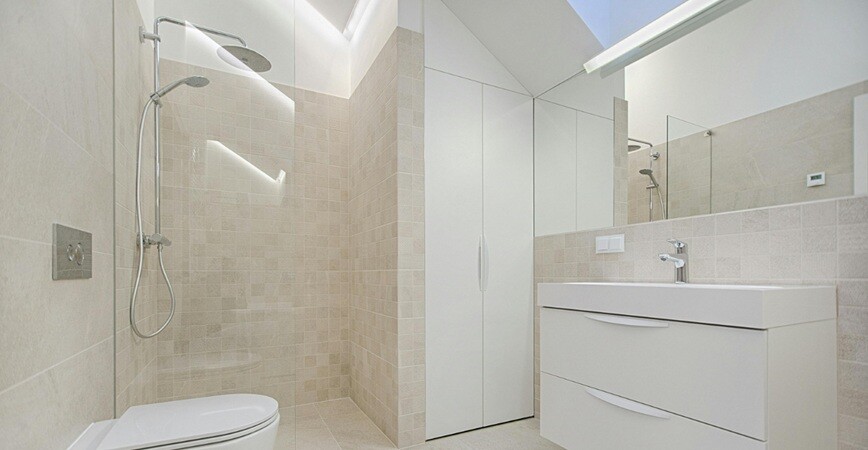
Architects and builders know that a bathroom design can be beautiful on paper and still miss the mark in daily use. This is because it’s not just about having a great design. Your design must also anticipate factors like how people enter, step over the tub, place a shower chair, and reach essentials without twisting or slipping.
By anticipating these factors, you get to make smarter decisions on things like clearances, wall structure, fixtures, and integration that can meet the immediate needs of users and future adaptability.
We will discuss the architectural considerations that make this possible so that you transform your bathroom design from potentially hazardous spaces into secure, functional environments.
Layout and Movement Planning
If you want to design a safe bathroom, you must first understand human movement patterns and reach zones because your priority should be designing for natural motion.
Most bathroom injuries result from minor inconveniences like towels that are placed too far, shampoo niches positioned behind the shoulder, or controls requiring dangerous reaches across wet surfaces.
Considerations
- First of all, you should use safety features like grab bars, curbless showers, walk-in showers, non-slip bathroom fixtures, and so on.
- You should also consider placing all controls, storage, and frequently used items within a comfortable 24-30 inch arc from the primary standing or seated positions.
- For tub/shower combinations, align valves and storage niches on the same wall to eliminate rotation in slippery areas.
- When designing for multiple users, consider the caregiver’s needs as well, not just the bather’s requirements. Remember that inner walls in tubs bring helpers closer while providing additional elbow room for both parties. Therefore, use that to your advantage.
- Make sure that there is sufficient maneuvering space around all fixtures. Actually, the ADA guidelines require this to be 60 inches wide by 56 inches deep, plus clearance space for fixtures.
- You should also pay special attention to step-over geometry. Lower threshold heights, wider internal floor spaces, and slimmer sidewalls improve user confidence and stability. When a person’s center of gravity remains closer to the support surface during entry and exit, even the perceived and actual safety increases dramatically.
Future-Ready Accessibility
The physical abilities of your users will change over time, and if you want to design a bathroom that remains useful for decades, then you must account for the changing physical abilities of people.
We briefly talked about accessibility features like grab bars and walk-in showers, and this is still relevant for bathrooms that are meant to adapt to future needs.
One way to make your bathroom designs future-ready in terms of accessibility is to install blocking in wall framing during construction at standard grab bar locations: 33-36 inches above the finished floor level, and positioned where hands naturally fall when entering, exiting, or using fixtures. By doing this, you prepare for future installations of support bars exactly where needed without reconstructing the entire wall.
- When designing showers and tub areas, keep mobility aids in mind, obviously, without crowding up the place.
- Floor spaces should be able to accommodate shower chairs or transfer benches while maintaining access to controls, storage, and spray or splash patterns.
- This can be done for the toilet, too. Particularly, the toilet seat height must be between 17 inches and 19 inches above the floor.
- Adjustable features like hand-held showers can also be great.
Water and Moisture Management
Start by watching how water moves in your space. It doesn’t just go straight down, but rather, splashes off bodies, bounces off walls, and finds every horizontal surface to sit on.
A good design works with these patterns instead of fighting them, and here is how you can do the same:
- Angle your shower floor slightly so that the water naturally wants to head toward the drain, not pool in corners or creep under the door threshold.
- The transition between your tub and the wall deserves real attention. That back edge where they meet? It either works perfectly or becomes a maintenance nightmare.
- Skip the fancy trim pieces that create little shelves for water to sit on.
- Behind your walls, run a waterproof membrane everywhere water might reach, then add another foot beyond it. Every penetration through that membrane, like the grab bar backing, needs special attention. Seal it at the membrane level, not just where you can see it.
- Your exhaust fan should be sized generously, and you should also vent it outside, not into the attic, where all that moisture becomes someone else’s problem later. You should position the intake where the steam gathers most, which is usually right over the shower area. Also, a fan that’s too loud won’t get used, and one that’s too small won’t matter. Get both right.
Material Selection for Safety and Performance
Materials in bathrooms have to work overtime. They face hot water, cold air, soap scum, and bare feet every single day. Pick the wrong stuff and you’ll be fighting problems from day one.
Floor Materials
Floors come first. Glossy tile looks great in the showroom, but turns into a skating rink when wet. You want something with teeth to it. It shouldn’t be rough enough to scrape skin, but textured enough to give your feet purchase.
Smaller tiles help because the grout lines create natural slip resistance.
Tubs and Shower Pans
Ever step into a cold tub on a winter morning? It’s jarring, and jarring makes people move fast and lose their balance. Good acrylic holds heat and feels warmer to the touch than cheap fiberglass.
It also stays smoother longer and doesn’t develop that chalky film that builds up on lower-grade materials.
Grout
Grout gets overlooked until it fails. Standard grout belongs in dry areas, period. Wet zones need epoxy-based formulas that actually repel water instead of soaking it up. White grout shows every soap mark, and black grout shows every mineral deposit.
Go with something in between, like tan, gray, beige, so you can have a room that stays clean with normal maintenance. The real test isn’t how materials look when new. It’s how they perform after years of actual use.
Conclusion
People won’t notice when you design the bathroom well, but if you don’t, they will complain. When you get the hard things right, the user experience will be seamless, and this should also be your goal. These considerations and other functional items in a bathroom will get you there.
Build rooms that work now and in the future. Your 30-year-old client might need grab bars at 80, so plan accordingly from the start.
You may also like to read,