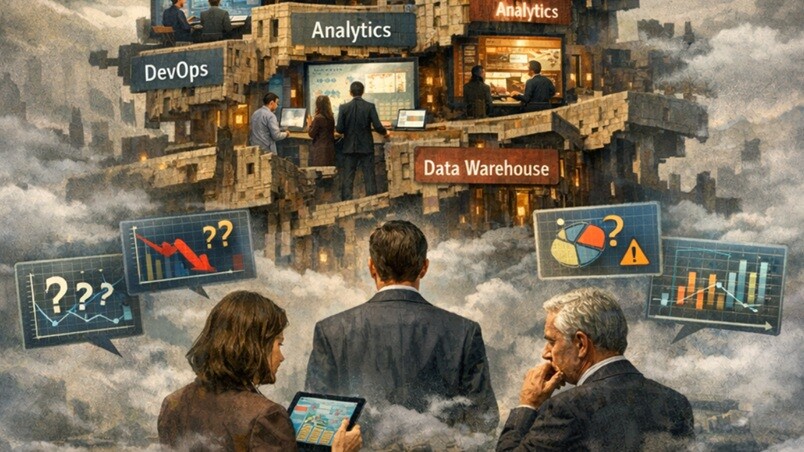
In the race to modernize, many enterprises have inadvertently built a digital Tower of Babel. Teams adopt specialized tools for niche problems, only to realize that these solutions cannot communicate with one another. This fragmentation creates a landscape where data exists in isolation, leaving leadership to navigate a fog of conflicting metrics and hidden risks.
The true cost of a fragmented architecture is not just the software licensing fees. It is the systemic blindness that occurs when your infrastructure, security, and application layers do not share a common language. When systems are siloed, the gaps between them become the primary breeding ground for critical failures and security vulnerabilities that go undetected until they impact the bottom line.
The Fragmented Enterprise At a Glance
The following data highlights how tool sprawl impacts the modern technical environment and the measurable benefits of moving toward a unified observability model.
| Impact Metric | Fragmented Environment | Integrated/Unified Environment |
| Mean Time to Detection (MTTD) | High (Hours to Days) | Low (Minutes) |
| Data Silos | 8 to 12 disconnected sources | Single source of truth |
| Security Risk | High (Visibility Gaps) | Lower (Unified Auditing) |
| Operational Overhead | High (Manual Correlation) | Lower (Automated Analysis) |
The Hidden Gaps in Your Digital Infrastructure
When business units operate their own independent stacks, the organization loses its ability to see a complete picture of its health. This lack of visibility is particularly dangerous during incident response. If the network team sees green lights while the database team sees red, the resulting finger-pointing delays resolution. You can find more details on how these disconnects manifest in enterprise technology infrastructure reports, which highlight the necessity of cross-tier visibility.
Furthermore, fragmented systems degrade the quality of decision-making. Leaders often rely on reports that are outdated by the time they are manually compiled from various dashboards. To stay competitive, companies must prioritize modern data integration strategies that ensure information flows seamlessly across the organization. This lack of flow does not just slow down humans; it also hampers the ability of automated systems to react to emerging threats in real time.
Why Shared Visibility is the Foundation of Resilience
True operational resilience requires more than just better software. It requires a fundamental shift in how teams interact with their data. By unifying disparate streams into a single pane of glass, organizations can identify blind spots before they become outages. Many firms are now looking at advancements in cloud monitoring to bridge the gap between legacy systems and modern cloud native applications.
An effective IT monitoring and troubleshooting platform addresses the gaps caused by disconnected tools by unifying data and visibility across systems. This enables teams to identify blind spots, improve coordination, and make more informed decisions at scale. These platforms leverage AI and machine learning to automate complex processes, which significantly improves performance while reducing operational costs. For leaders looking to optimize their stack, it is helpful to compare available solutions for network management to find a fit that supports full-stack observability.
Consequences of Information Silos
- Increased Security Vulnerabilities: Unmonitored gaps between tools often serve as entry points for malicious actors.
- Wasted Human Capital: Highly skilled engineers spend their time manually correlating logs instead of innovating.
- Inconsistent Customer Experience: Front-end issues may go unresolved because back-end teams lack visibility into user impact.
- Ballooning Infrastructure Costs: Without a unified view, organizations often over-provide resources to compensate for inefficiency.
How to Bridge the Technical Visibility Gap
Transitioning from a fragmented state to a unified one requires a methodical approach. It is not enough to simply buy new software. You must align your technical architecture with your business goals.
Implementation Checklist for Unified Visibility
- Audit your existing toolset to identify overlapping functionalities and redundant subscriptions.
- Establish a common data schema so that different departments can share and interpret the same metrics.
- Prioritize API first solutions that allow for deep integration with your existing core systems.
- Consult high-performance computing trends to understand how scalable data processing can support your long-term growth.
- Invest in training to ensure that cross-functional teams understand how to use shared dashboards effectively.
- Review emerging cybersecurity mesh patterns to ensure your integrated visibility also enhances your defensive posture.
Scaling Through Integration
As your business grows, the complexity of your technical debt will naturally increase. By investing in integrated systems today, you are not just fixing a technical problem; you are building a foundation for future agility. A unified architecture allows for faster deployment cycles and more robust security. It transforms your IT department from a cost center into a strategic engine for growth, ensuring that every piece of data serves a purpose in your broader business narrative.
Common Industry Queries
How do siloed systems impact incident response times?
Siloed systems force teams to manually piece together evidence from different sources, which significantly increases the time it takes to identify the root cause of an issue.
What are the security risks of fragmented toolsets?
Fragmented tools create visibility gaps where threats can hide undetected. If security logs are not integrated with performance data, unusual patterns may be dismissed as mere glitches.
Can AI improve visibility across disconnected tools?
AI and machine learning can ingest massive amounts of data from various sources to find correlations that humans might miss, effectively acting as a bridge between disconnected systems.
You may also like to read,
- Dynamics 365 Consulting: The Backbone of Modern, Connected Enterprises
- Top Trends Shaping the Future of Enterprise Software Solutions in 2026
- Dynamics 365 Customer Voice – A Virtual Bridge that Connects Customers with Businesses