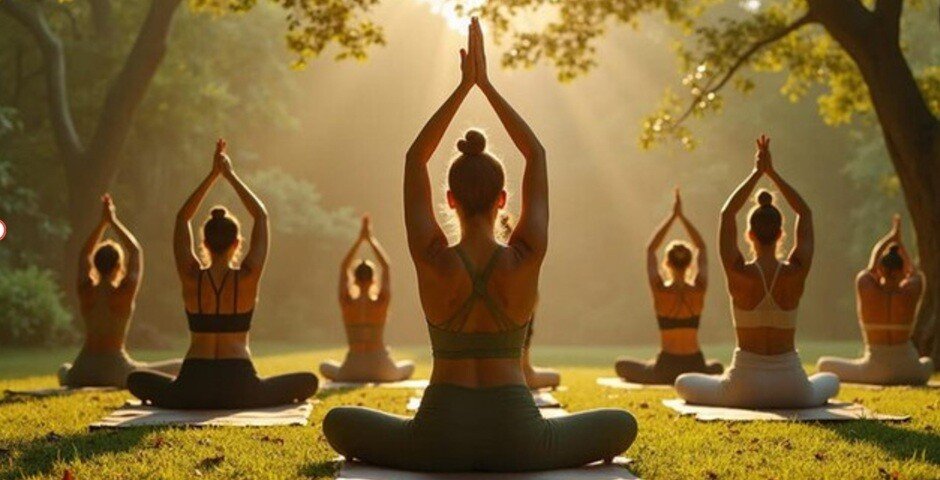
The world is tired. And it turns out, a poolside margarita just doesn’t cut it anymore.
There’s a quiet revolution happening in how people choose to spend their time off. Where once a holiday meant boarding a flight to a beach resort, ordering cocktails and scrolling Instagram poolside, 2026 has ushered in something different — something deeper. People are trading their tourist traps for tree-lined ashrams, their hotel buffets for sattvic meals, and their sightseeing checklists for stillness. And they’re coming back from these trips genuinely transformed.
This is not a passing trend. This is people waking up — quite literally — to the fact that rest and real restoration are two very different things. A yoga retreat doesn’t just give you a break from your life. It gives you the tools to go back to it differently.
The “Holiday Hangover” Nobody Talks About
Ask anyone who’s just returned from a packed European city tour or a boozy beach holiday. They need another holiday to recover from their holiday. Jet lag, overeating, late nights, endless social media content creation — modern tourism has quietly become another form of exhaustion dressed up as relaxation.
A yoga retreat operates on a completely different philosophy. The structure is intentional. You wake up before sunrise. You move your body in ways that connect breath to thought. You eat food that was prepared with care. You sleep deeply. And by day three, something in you starts to shift.
“People don’t want to be tourists anymore. They want to be travellers — and more than that, they want to come home as someone slightly more whole than when they left.”
6 Real Reasons People Are Making the Switch in 2026
Mental health is the new luxury
Burnout has become so normalised that genuine mental clarity now feels exotic. Yoga retreats offer structured decompression — not just a change of scenery.
Digital detox is in demand
Screen fatigue is real. Retreats in places like Rishikesh actively encourage disconnecting — and people are craving that permission slip to unplug.
Purposeful travel over consumption
Gen Z and Millennials are rejecting throwaway tourism. They want experiences that mean something — and a yoga retreat delivers a compelling story of personal growth.
Body + mind transformation
Unlike a standard holiday, a retreat produces measurable change — improved flexibility, better sleep, reduced anxiety — that travellers can actually take home with them.
Community over crowd
Retreats attract like-minded people. The connections formed in a yoga shala or on a Ganga riverbank often outlast the trip itself.
Value that lasts beyond checkout
A yoga retreat is an investment with compound returns — the meditation practice, the breathing techniques, the self-awareness — all of it travels home with you.
Why Yoga Retreat Rishikesh Is the World’s Most Sought-After Destination
If the global yoga retreat movement has a spiritual capital, it is undeniably Rishikesh. Perched in the foothills of the Himalayas, where the Ganges runs cold and fast and impossibly clear, this ancient city has been drawing seekers, sages, and students for centuries. But in 2026, a Yoga Retreat Rishikesh is no longer just a pilgrimage for the deeply spiritual — it has become the aspiration of anyone who wants to emerge from their holiday genuinely renewed.
What makes a Yoga Retreat in Rishikesh different from retreats offered elsewhere in the world? It starts with the lineage. Rishikesh is where classical yoga originates. The teachers here didn’t pick up yoga through a 200-hour online certification during lockdown. Many of them come from guru-shishya traditions that have been passed down through generations. When you practise yoga in Rishikesh, you’re not attending a fitness class — you’re stepping into a living tradition.
The environment compounds this. The sound of bells drifting across the Ganga at dawn, the smell of incense and marigolds during evening aarti, the deep quiet of mountains that feel older than language — these are not decorative details. They are the retreat itself. The healing begins the moment you land.
What to Expect at a Yoga Retreat in Rishikesh
A typical Yoga Retreat Rishikesh programme blends ancient wisdom with modern comfort. Here’s what a day often looks like:
- 5:30 AM — Pranayama and meditation as the sun rises over the Himalayas
- 7:00 AM — Hatha or Ashtanga yoga session on a riverside shala
- 9:00 AM — Sattvic breakfast (seasonal, plant-based, prepared fresh)
- 11:00 AM — Philosophy classes, Ayurveda workshops, or free exploration
- 2:00 PM — Restorative yoga or sound healing session
- 6:00 PM — Evening aarti ceremony on the banks of the Ganga
- 8:00 PM — Organic dinner, journalling, and early rest
Rishikesh vs. Bali, Costa Rica, and Other Retreat Hotspots
Bali is beautiful. Costa Rica is lush. Tulum has an Instagram aesthetic that converts perfectly. But if you’re seeking an authentic yoga retreat experience — one rooted in the actual history and philosophy of yoga — Rishikesh exists in a category of its own. The depth of tradition here is simply not replicable elsewhere. You can practise yoga in a Balinese resort and eat beautifully and feel well. But in Rishikesh, the landscape itself is part of the curriculum.
There’s also a diversity of offerings that has matured significantly. Today’s Yoga Retreat Rishikesh options span everything from 3-day immersive weekends to 28-day transformational programmes. Whether you are a complete beginner who has never held a downward dog or an experienced practitioner ready for advanced pranayama and meditation, there is a programme shaped for you.
The Practical Case: It’s More Affordable Than You Think
One persistent myth is that yoga retreats are expensive indulgences. In Rishikesh specifically, this simply isn’t true. A week-long Yoga Retreat in Rishikesh — including accommodation, all meals, and daily classes — can cost a fraction of a comparable wellness holiday in Europe or the Maldives. When you factor in what you receive: daily expert instruction, Ayurvedic meals, guided meditation, philosophical discourse, and access to one of the most spiritually charged landscapes on earth, the value equation becomes remarkable.
What People Bring Home From a Yoga Retreat
The most important thing a yoga retreat gives you isn’t a yoga mat or a Rudraksha mala. It’s a different relationship with yourself. People return from a Yoga Retreat Rishikesh reporting quieter minds, stronger boundaries, more consistent sleep, reduced dependence on alcohol, less reactivity in relationships, and a sense of purpose that can feel startlingly clear after months or years of fog.
These aren’t anecdotes. Wellness researchers tracking retreat participants across extended periods consistently note improvements in biomarkers associated with chronic stress — cortisol levels, heart rate variability, and inflammatory markers. A yoga retreat, done well, is quite literally healing the body while settling the mind.
Is a Yoga Retreat Right for You in 2026?
If you’ve found yourself feeling depleted despite taking holidays. If you’ve noticed that your standard breaks leave you returning to the same patterns, the same stress, the same state of mind — then yes. A yoga retreat, and particularly a Yoga Retreat Rishikesh, may be exactly the kind of reset your system is asking for.
You don’t need to be flexible. You don’t need to be spiritual in any conventional sense. You don’t need to have meditated before. You only need to be willing to arrive, slow down, and stay curious about what that slowing down might reveal.
The world is very loud right now. Rishikesh offers something increasingly rare: the sound of the river, the stillness of the mountains, and the space to hear yourself think again. In 2026, that might be the most radical holiday you can take.
You may also like to read,