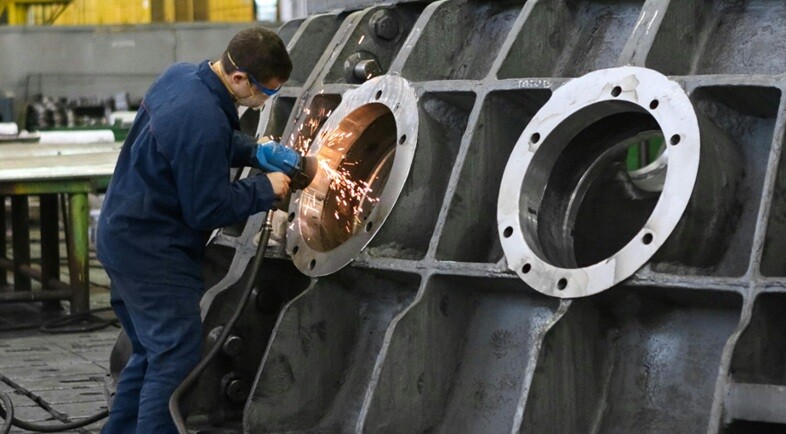
The global manufacturing landscape is transforming at an unprecedented pace. Smart factories, powered by connected machines, real-time analytics, and AI-driven automation, are reshaping what it means to work on the factory floor. Yet contrary to the popular narrative, this revolution isn’t about replacing people. It’s about redefining their value.
Key Insights for Industry Leaders
- Smart factories blend human ingenuity with machine precision, not human replacement.
- Demand is rising for digital literacy, systems thinking, and cross-functional problem-solving.
- Upskilling and reskilling are now critical investments, not optional perks.
- Human-machine collaboration is the new operational heartbeat of advanced manufacturing.
- Empowered workers, not just smarter machines, define long-term competitiveness.
From Assembly Lines to Adaptive Systems
Traditional manufacturing relied on consistency: people performing repetitive tasks to ensure predictable output. Smart factories flip that model. They thrive on adaptability, where machines sense, learn, and adjust processes in real time. Workers are no longer tied to a single function; instead, they act as orchestrators of intelligent systems, monitoring data streams, interpreting patterns, and intervening where human judgment adds irreplaceable value.
A Quick Comparison of Workforce Shifts
| Past Manufacturing Role | Emerging Smart Factory Role | Key Skill Focus |
| Machine Operator | Automation Supervisor | Data interpretation, maintenance of robotic systems |
| Line Inspector | Quality Analyst | Statistical process control, anomaly detection |
| Maintenance Technician | Predictive Maintenance Specialist | IoT data analytics, sensor calibration |
| Production Planner | Digital Twin Coordinator | Simulation modeling, process optimization |
This shift doesn’t diminish the role of workers, it expands it. Factories are becoming cognitive environments where human expertise complements computational precision.
The Digital Backbone: Intelligent Manufacturing Systems
Beneath every modern factory’s automation lies a quiet layer of intelligence connecting machines, sensors, and people. These intelligent manufacturing systems process data directly on the factory floor, allowing real-time monitoring and faster responses to production changes.
Unlike traditional cloud-based setups, they rely on edge computing to analyze information where it’s generated. This reduces latency, improves reliability, and keeps operations stable even in harsh industrial conditions. Workers benefit from immediate insights into performance and maintenance needs, enabling quicker, more confident decisions. The result is a feedback loop where humans and machines continuously learn from one another.
In practice, it’s less about replacing workers with automation and more about giving them the tools to work smarter.
Why Human Skills Still Matter Most
Even in hyper-automated environments, machines lack two key capabilities: empathy and context. Humans interpret nuance, understand cause and consequence, and make ethical or safety-related judgments that algorithms can’t replicate.
Leaders in smart manufacturing are realizing that success isn’t measured by how many robots you deploy, but by how effectively your people work with them. Workers who can blend mechanical knowledge with digital fluency will be the most valuable assets in the coming decade.
Here’s what this looks like in practice:
- Teams using augmented reality to guide maintenance while viewing live sensor data.
- Operators analyze predictive analytics dashboards to prevent downtime.
- Supervisors are adjusting machine learning parameters based on real-world anomalies.
How to Build a Workforce Ready for Smart Manufacturing
Preparing people for smart factory roles doesn’t happen by accident. It requires structured, ongoing investment.
Checklist for Future-Ready Manufacturing Teams
- Establish continuous reskilling pathways aligned with digital transformation goals.
- Partner with local technical institutes to develop industry-specific training programs.
- Integrate human-machine collaboration modules into on-the-job learning.
- Deploy mentorship systems pairing digital-native employees with experienced engineers.
- Regularly assess skill gaps and align training to evolving technologies.
Such strategies not only close the capability gap but also reinforce employee confidence, the fuel of any adaptive organization.
Building Resilience Through Human-Machine Collaboration
In the smart factory ecosystem, resilience stems from shared intelligence. Machines detect, humans decide. Algorithms suggest, operators refine. This synergy creates agile production environments that can withstand disruptions, from supply chain shocks to equipment failure.
Before diving deeper, let’s outline the essential domains every modern manufacturing leader should focus on.
Core Focus Areas for Smart Factory Transition
- Cyber-Physical Integration: Ensuring digital twins accurately mirror physical operations.
- Real-Time Monitoring: Leveraging IoT sensors to predict and prevent breakdowns.
- Data-Driven Decision-Making: Turning analytics into adaptive manufacturing logic.
- Safety and Human-Centric Design: Building ergonomically and cognitively supportive systems.
Each area reinforces the same principle: humans remain at the center of industrial innovation.
Frequently Asked Questions
Before we close, let’s address some of the most common questions about smart factory workforce evolution.
Q1: Will automation lead to widespread job loss?
Not broadly. Automation changes job content, not job count. Routine manual work decreases, but roles requiring supervision, maintenance, and data analysis expand.
Q2: What skills should manufacturing workers focus on next?
Digital literacy, system integration, analytics, and interdisciplinary problem-solving.
Q3: How can smaller factories adapt without massive investment?
Start with incremental automation and targeted reskilling. Even small data projects can yield measurable productivity gains.
Q4: How does AI improve worker safety?
By monitoring environments, predicting hazards, and automating high-risk or repetitive processes, freeing humans to focus on oversight and strategy.
Conclusion
The smartest factories of tomorrow aren’t just wired with sensors or automated by robots. They’re powered by human adaptability, by people who learn, question, and co-create with machines. When workers are supported and empowered through the right tools, training, and trust, automation becomes not a threat, but a multiplier of human potential.
The factories that understand this will not only produce more efficiently, but they’ll also lead the next industrial era with people at their core.
You may also like to read,