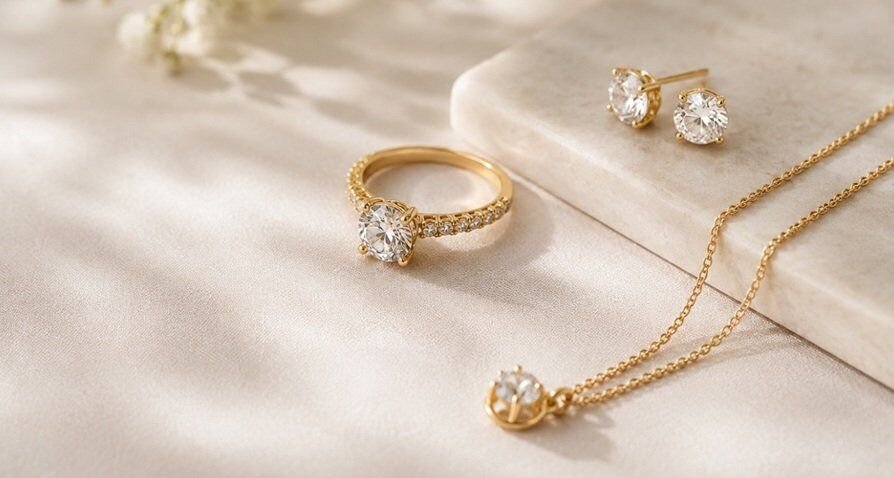
When you shop for a computer or even a car, specs matter just as much, if not more, than photos. But jewelry shopping is often deeply personal and more emotional.
With the right angles and lighting, jewelry sparkles in a thousand different directions, influencing how shoppers feel the moment they see a piece. It makes them fall in love with it, and oftentimes, it’s that’s what turns a shopper into a buyer.
Jewelry Photography Conveys Product Quality
When beautifully shot and presented, engagement rings present high-quality craftsmanship, intricate detail, and elegance with one glance.
If it’s poorly lit or doesn’t accurately present details, the customer may assume the ring is also low quality. Findings from the Baymard Institute show that poor images not only drag down users’ perceptions of products but also cause product abandonment. It’s because they communicate that a brand doesn’t care enough to provide consumers with the visuals needed to make a purchase decision.
The takeaway: If brands don’t have high-resolution photos, they’ll find another brand that does.
Pictures Communicate What Words Cannot
There’s a reason why they say a picture is worth a thousand words. It’s because it’s true!
It won’t matter how creative copy is or how amazing the brand’s craftsmanship is if the photos are lackluster. And consumers agree. Nautilus Marketing notes that almost two-thirds of consumers say images are more important than product descriptions.
This is especially important with jewelry, where each piece has the power to evoke emotions, tell stories, and become an everyday staple in someone’s life. Photos act as a consumer’s “try before you buy” without actually holding or experiencing the jewelry in real life.
First Impressions Matter. Make Yours Count with Beautiful Photography.
We all know that first impressions matter when encountering new people or things. But it’s even more pivotal for online businesses.
Google research shows that website visitors build an initial “gut feeling” that helps them decide whether they’ll leave or stay in just 17 to 50 milliseconds. That’s even shorter than the blink of an eye!
So, within this timeframe, you have to capture their attention with your product photography.
Visuals Tell Consumers What to Expect
Online jewelry shoppers can’t touch a piece. They can’t feel its weight or examine its craftsmanship, as they would in a brick-and-mortar jewelry store. Instead, they rely on images to get a sense of its beauty, artistry, and how it’s made.
Strong photos clarify details like color, texture, and scale, which text descriptions alone can’t convey. This helps reduce uncertainty and improve customer satisfaction.
Photography Differentiates Jewelry Brands
Color. Cut. Clarity. Carat. Technical specifications are undoubtedly important while jewelry shopping. But many jewelry brands invest in quality craftsmanship. So, why yours?
Product photography communicates how a brand stands out from the competition before shoppers ever reach an “About Us” page. It captures the human behind the brand, turning values and beliefs into something people can see and feel.
This looks different for every brand. Do you want shoppers to feel warm and welcomed? Do you want them to feel understood or part of something exclusive?
Tell a story or build your brand image with techniques such as:
- Saturated or textured backdrops
- Backlighting
- Minimalist setups
- Side-lit compositions
- Color grading
- Variations in shadows and contrast
Remain Consistent Across All Channels
There are a myriad of editing and professional photography techniques that can differentiate brands. However, you must remain consistent across your website and social media. Consistency helps establish a recognizable brand aesthetic.
Make it your own for a harmonious brand image.
Professional Photography Establishes Trust
Consumers are more assured of the quality and authenticity of jewelry when they can view high-quality images. Scale references reassure them about size. Close-ups reassure the level of craftsmanship and materials used. When they trust what they see, they’re more likely to complete their purchase.
Product Images Build Emotional Connections
Consumers don’t just buy jewelry. They buy experiences, memories, and feelings. Product photography that taps into these emotions helps brands forge strong connections with consumers.
Whether it’s an intimate engagement photo or a close-up of a bedside jewelry box, photos not only help people imagine jewelry in their lives but also evoke feelings like joy and nostalgia. And emotion is a major purchase motivator.
What Makes an Excellent Jewelry Photo?
Photography helps consumers perceive jewelry and brands. But this necessitates more than a simple point-and-shoot.
Lighting Sets the Tone
Lighting sets the foundation for jewelry photography. Consider it the silent storyteller behind every great product photo, conveying quality, color, details, and brand image.
Natural light is an excellent option. It delivers a soft glow that’s perfect for lifestyle images and brands that want an organic feel. However, it can be unpredictable. This requires careful planning and adaptability, such as softbox lighting.
Most brands opt for artificial lighting for website photos. It provides precise control when it comes to color temperature, contrast, and shadows. It also delivers consistency, which is key for building a recognizable brand identity and creating a trustworthy shopping experience for consumers.
Your Background Should Align with Your Brand
The background of jewelry photos should never detract from the product. Many professional photos use white or neutral-colored backgrounds for their simplicity and elegance. However, they’re not the sole options.
Brands must instead choose backgrounds that align with their identity and products. For some, this means the understated sophistication of a cream backdrop. For others, this may mean a saturated backdrop that matches the boldness of their jewelry.
Details Are Clearly Visible
Consumers rely on images to understand products. Photos must show every important feature: size, shape, color, and texture. Customers must also be able to zoom without compromising image quality.
There’s a Clean and Clear Composition
Keep props to a minimum. Too many distracting elements in the background or foreground may take attention away from the jewelry.
Aim to create a clean, uncluttered composition that showcases your jewelry pieces predominantly.
Photos Are Authentic
Customers expect images to match the jewelry they receive. To create authentic visuals, you must:
- Use natural lighting or controlled studio setups to reflect true colors
- Avoid over-editing
- Avoid misleading effects or filters
- Abstain from using AI
You can also use scale references or simple props to reinforce scale.
Photography Is Integral to Jewelry E-Commerce
Not all product photography is created equal, and jewelry shoppers can tell. Low-resolution, poorly lit images are unappealing. They convey lower quality pieces. They make brands seem untrustworthy. And this ultimately ends up affecting jewelry e-commerce sales.
Product photography has become more than a visual tool. It’s the first impression, consumer confidence-booster, and decision-maker that turns casual browsers into active buyers, all in one.
By investing more in product photography, retailers can not only create a strong visual brand but also attract (and keep) consumers’ attention in the competitive world of jewelry e-commerce.
You may also like to read,
- The Evolution of Wedding Photography: What’s Trending in 2025
- Amazon Marketing Mastery: Boosting Sales on the E-commerce Giant
- Why Fine Art Photography Holds Lasting Value as a Creative and Financial Investment