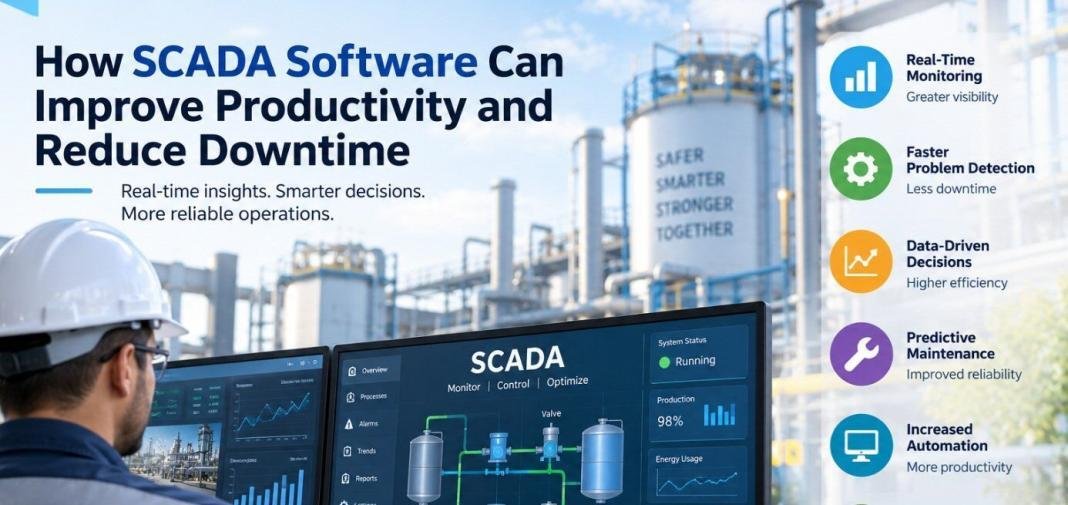
In today’s competitive industrial environment, organizations are constantly seeking ways to improve efficiency, increase output, and minimize costly disruptions. Manufacturing plants, utilities, energy facilities, and other industrial operations rely heavily on real-time data to keep processes running smoothly. Without effective monitoring and control systems, even minor issues can lead to significant downtime and lost productivity.
Modern automation technologies provide businesses with the tools needed to oversee operations, identify inefficiencies, and respond quickly to potential problems. Among these technologies, SCADA systems play a critical role in helping organizations maintain consistent performance while reducing operational risks.
Real-Time Monitoring Improves Operational Visibility
One of the biggest advantages of SCADA systems is their ability to provide real-time visibility into industrial processes. Operators can monitor equipment status, production rates, temperatures, pressures, and other critical data from a centralized interface.
This constant stream of information allows teams to identify abnormalities before they escalate into major issues. Instead of relying on manual inspections or delayed reports, operators can make informed decisions based on current operating conditions.
Improved visibility leads to faster responses, greater process control, and more efficient use of resources, all of which contribute to higher productivity.
Faster Problem Detection Reduces Downtime
Unexpected equipment failures are among the leading causes of production interruptions. When problems go unnoticed, they can quickly result in extended downtime and expensive repairs.
SCADA systems continuously collect data from connected devices and sensors. If equipment begins operating outside normal parameters, alerts and alarms can notify operators immediately. Early warning capabilities enable maintenance teams to investigate potential issues before they cause serious disruptions.
This proactive approach helps businesses resolve problems faster, reduce downtime, and avoid costly production delays.
Enhanced Data Collection Supports Better Decision-Making
Industrial facilities generate large amounts of operational data every day. Collecting this data manually is time-consuming and often prone to errors.
By implementing SCADA software, organizations can automatically gather, store, and analyze critical operational information from multiple systems and locations. Historical data trends help managers evaluate performance, identify inefficiencies, and make data-driven decisions that support continuous improvement.
Access to accurate information enables leadership teams to optimize workflows, improve production planning, and allocate resources more effectively.
Condition Monitoring Supports Predictive Maintenance
SCADA systems can provide valuable operational data for monitoring equipment condition. By continuously tracking metrics such as temperature, pressure, vibration, and other performance indicators where appropriate sensors are available, maintenance teams can identify potential warning signs.
SCADA does not by itself provide predictive maintenance. However, its operational data can support condition-monitoring and predictive-maintenance workflows when combined with suitable sensors, historical data, analytics, and maintenance processes. This can help organizations identify potential equipment problems earlier and schedule maintenance before failures cause major disruptions.
As a result, organizations can improve equipment reliability, reduce unexpected breakdowns, and minimize interruptions to production schedules.
Increased Automation Enhances Productivity
Industrial automation is a key driver of productivity growth. SCADA systems support automation by enabling centralized control of various processes and equipment.
Operators can automate routine tasks, manage system responses to changing conditions, and reduce the need for manual intervention. Automated processes often perform tasks more consistently and accurately than manual operations, reducing the risk of human error.
By freeing employees from repetitive duties, businesses can focus their workforce on higher-value activities that contribute to operational efficiency and overall performance.
Improved Remote Access and System Management
Many industrial organizations operate across multiple facilities or geographically dispersed locations. Managing these operations efficiently can be challenging without access to centralized data.
Modern SCADA solutions can allow authorized personnel to monitor and, where supported, manage systems remotely, provided appropriate access controls and security measures are in place.
Remote accessibility can significantly reduce response times, improve coordination between teams, and ensure quicker resolution of operational problems.
Better Resource Utilization and Energy Efficiency
Reducing waste is another important factor in improving productivity. SCADA systems help organizations track resource consumption, monitor energy usage, and identify areas where efficiency can be improved.
With access to detailed operational data, businesses can detect inefficiencies such as unnecessary equipment runtime, excessive energy consumption, or process bottlenecks. Correcting these issues helps reduce operating costs while maximizing production output.
More efficient resource management not only increases profitability but also supports sustainability goals and regulatory compliance efforts.
Conclusion
SCADA technology is an important component of many modern industrial operations. Through real-time monitoring, rapid problem detection, predictive maintenance, automation, remote management, and improved resource utilization, organizations can significantly enhance productivity while reducing costly downtime. Businesses that invest in effective SCADA solutions can achieve greater operational reliability, improved efficiency, and long-term success in an increasingly automated industrial landscape.
You may also like to read,
- Why Website Monitoring Is Essential for Business Success and Security
- Strategies To Stretch Your Budget as a Small Business
- CRM Software for Smarter Customer Growth and Retention