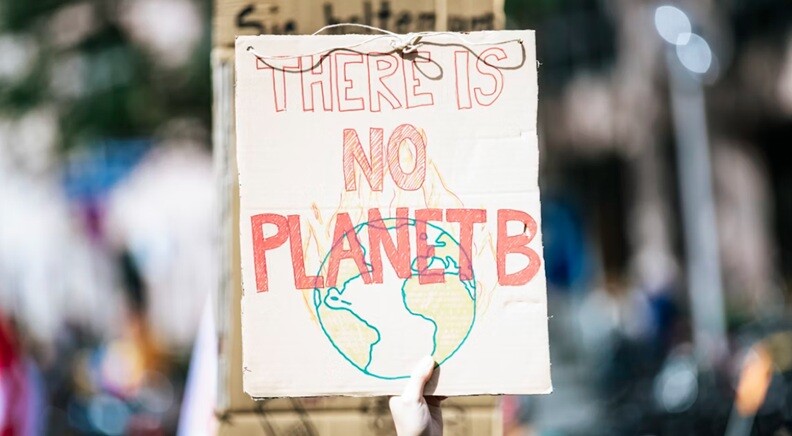
Climate change has direct and noticeable effects. Rising sea levels, stronger storms, and unpredictable rainfall impact communities. Companies and governments are rushing to adapt, but planning is challenging because of how quickly these changes are happening.
Satellites and sensors have allowed us to observe these developments for years. They measure greenhouse gases, record temperatures, and capture images of forests. The deluge of knowledge is the issue, not a lack of it. Every day, researchers generate significantly more data than they can handle with conventional tools.
AI-powered Earth Observation, or EO, can help with this. AI reads data in real time and transforms it into knowledge that informs decisions rather than gathering it for storage.
With this shift, EO moves from watching to predicting, from reporting to verifying, and from concentrating intelligence in a few institutions to spreading it more widely. These capabilities make it the next frontier in climate action.
From Raw Data to Intelligent Predictions
AI transforms EO by making data useful instead of overwhelming. The sheer scale of satellite images and sensor readings can bury important signals. Machine learning methods filter this information, highlight patterns, and generate predictions that matter on the ground.
Consider the agricultural sector. Weeks before the consequences appear, AI can identify a higher risk of crop failure by examining minute variations in soil chemistry and moisture. The ability of water management to spot early indicators of stress in reservoirs and aquifers can be used to forecast drought situations before they worsen.
This shift changes how you prepare for climate risks. You anticipate the damage and intervene before it manifests itself. Several platforms have already been developed to provide more real-time insights for oil and gas exploration and production. This allows for timely and accurate answers instead of depending just on speculation.
Hyperlocal Climate Intelligence for Targeted Action
Global climate models help determine long-term trends, but their scale is too broad to guide local action. AI narrows the lens. It enables the conversion of global projections into information unique to a community, a watershed, or a region of agricultural land.
Consider two rice fields in the same province. One might be prone to flash floods while the other faces soil drying. Without detailed intelligence, both fields would receive the same advice or support. With AI-powered EO, however, each farmer receives guidance tailored to the exact risks they face.
The same holds for financing adaptation. Instead of allocating cash evenly throughout a large region, governments and humanitarian organizations may focus resources on the populations who are most in danger. Policies become more accurate and effective when they are based on hyperlocal projections as opposed to broad averages.
Bringing Models and Reality Closer
Climate models have always been important, but they sometimes take a long time to adjust to conditions that are changing quickly. AI-driven EO keeps them closer to reality. By feeding in live satellite and sensor data, models adapt continuously and produce updated predictions.
This has led to the rise of climate digital twins. These virtual representations of actual ecosystems, cities, or economies are dynamic and adapt to changing circumstances. A digital twin allows you to assess potential outcomes by running scenarios. To assess the impact of future storm surges on large coastal communities, for instance, a digital twin can compare the results with and without new flood defenses.
The value lies in planning. You no longer rely on static reports that age quickly. You can test methods before making expensive expenditures with the help of a living model. This is part of a broader trend in which new developments in renewable energy domains, like wind, are also changing how to prepare for climate threats and energy requirements.
Enforcing Accountability and Trust in Climate Finance
One of the most persistent challenges in climate action is trust. Many offset programs, forest conservation efforts, and reforestation projects face doubts about accuracy. The promised reductions in carbon emissions are often difficult to prove, and forest protection claims are not always backed by evidence.
AI-powered EO helps address these concerns. AI identifies illicit logging, finds methane leaks, and analyzes reforestation progress using high-resolution satellite analysis. There is little need to wait for drawn-out audits or field inspections because these observations take place instantly.
This translates into increased confidence for carbon markets, governments, and investors. Credits and claims are backed by verifiable data rather than estimates. When transparency improves, money moves more quickly to projects with proven impact. This strengthens markets and increases the pace of meaningful climate action.
Democratizing Access and Bridging Equity Gaps
Climate intelligence has long been concentrated in well-funded institutions. Numerous vulnerable populations, like small island states and indigenous tribes, depend on outside expertise for data and analysis. One is at a disadvantage while bargaining and making choices because of this.
AI-powered EO shifts this balance. With cloud-based and open platforms, frontline communities gain access to the same quality of intelligence once limited to large research centers. A fishing village can track ocean warming trends that affect its catch, while a coastal town can monitor rising seas and plan defenses without waiting for external reports.
Communities can now use their own evidence to participate in international climate negotiations thanks to this access. They present intelligence based on their personal experiences rather than data generated elsewhere. This leads to more equitable dissemination of knowledge and more participation from those most affected by climate change in the development of solutions.
Conclusion
AI-powered Earth observation encompasses more than just aerial observations. It involves transforming streams of unprocessed data into knowledge that enables you to take quicker action, make better plans, and hold systems responsible.
AI-based EO provides a basis for realistic climate response by forecasting risks before they escalate, scaling down forecasts to the local level, aligning predictions with actual changes, assigning responsibility, and making intelligence more accessible.
This change represents more than new tools. It marks the beginning of a living infrastructure for resilience that is constantly active, learning, and prepared to assist in decision-making. This is the type of intelligence that will be most important as climate pressures continue to increase.
You may also like to read,