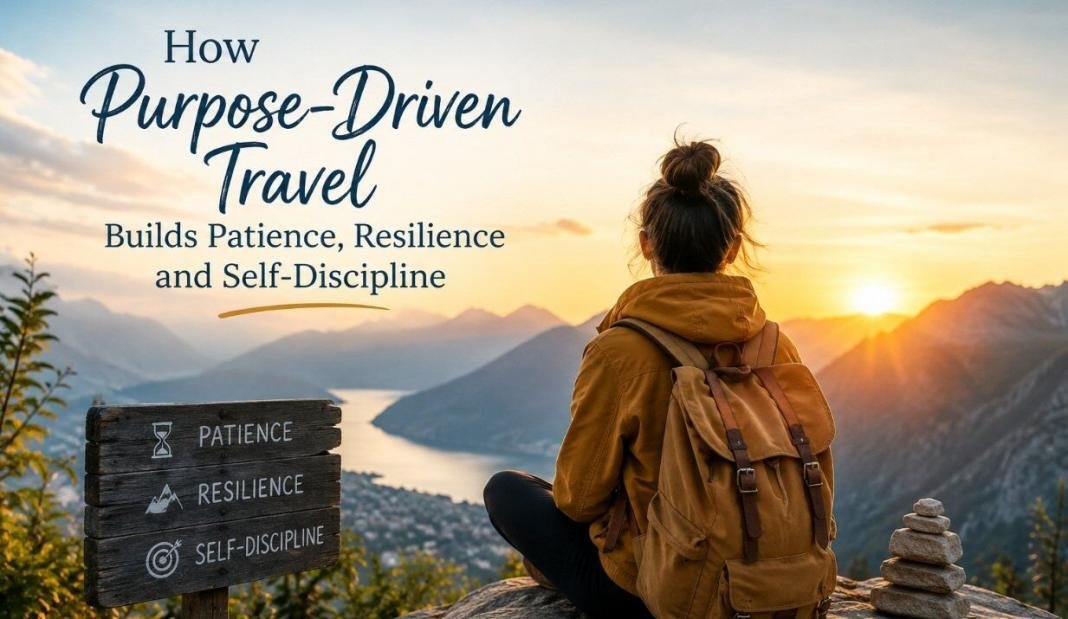
Travel is often associated with relaxation and escape, but some journeys can do something more lasting: they can challenge the habits and behaviours we rely on every day. When travel has a clear purpose, unfamiliar situations can become opportunities to practise patience, resilience and self-discipline.
Purpose-driven travel differs from an ordinary holiday because the journey has meaning beyond entertainment. Someone may travel to volunteer, reconnect with family, attend a retreat, explore their heritage or complete a spiritual pilgrimage. Whatever the reason, meaningful travel often places people in unfamiliar situations where they must practise patience, make thoughtful decisions and adapt when things do not go as planned. These experiences can strengthen resilience, self-discipline and emotional awareness long after the journey ends.
Purpose Changes the Way You Experience Travel
A typical holiday often focuses on relaxation, sightseeing and enjoyment. Purpose-driven travel begins with a different question:
Why am I making this journey?
A clear answer can influence almost every decision you make. Instead of trying to fit as many activities as possible into your itinerary, you may become more selective about how you use your time. You start thinking about what you want to learn, experience or achieve.
This shift creates greater intentionality. When people act with purpose, they often become more aware of their choices. They may spend less time distracted by social media, unnecessary shopping or constant entertainment and more time paying attention to their surroundings and priorities. That awareness can continue after returning home.
Travel Teaches Patience Through Uncertainty
Even the best-planned journey rarely goes exactly as expected. Flights can be delayed. Transport may take longer than planned. Hotels can become busy. Weather can disrupt activities. Language differences may make simple tasks more complicated.
These situations can feel frustrating, but they also give travellers repeated opportunities to practise patience. You cannot control every queue, delay or unexpected change. You can, however, control how you respond. Learning to remain calm when circumstances change helps build emotional regulation. Instead of reacting immediately, you learn to pause, assess the situation and choose the most useful response.
This skill has obvious value after travel. Work deadlines, university pressures, family responsibilities and difficult conversations all involve situations that cannot always be controlled. The patience developed while navigating an unfamiliar journey can make these everyday challenges easier to manage.
Meaningful Journeys Build Resilience
Resilience does not mean avoiding difficulty. It means learning how to continue when circumstances become uncomfortable or uncertain. Travel naturally creates small tests of resilience. You may feel tired after a long journey, struggle with an unfamiliar environment or need to solve a problem without the usual people and resources around you. Each successfully managed challenge builds confidence.
You begin to realise:
- inconvenience does not always mean disaster;
- plans can change without ruining the entire experience;
- unfamiliar situations become easier with time;
- asking for help is sometimes the most practical solution;
- discomfort can be temporary.
These lessons gradually change how people approach difficulties. Instead of assuming that every problem will become overwhelming, they develop greater confidence in their ability to adapt.
Planning Strengthens Self-Discipline
Meaningful travel often requires more preparation than an impulsive weekend holiday. You may need to save money, arrange time away from work, organise documents, research local customs or prepare physically for the journey.
This requires discipline before you even leave home. Saving for travel, for example, may mean reducing unnecessary spending for several months. Preparing around university or work commitments may require finishing important tasks earlier instead of leaving everything until the last minute.
The journey itself also demands structure. Travellers may need to wake early, follow schedules, manage their energy and make responsible choices even when they feel tired. These behaviours strengthen habits that can support productivity in everyday life.
Spiritual Travel Can Create Space for Reflection
Spiritual journeys provide a particularly strong example of purpose-driven travel. For Muslims, Umrah is not simply international tourism. The journey centres on worship, reflection and visiting Makkah and Madinah.
Preparing for such a pilgrimage involves both spiritual and practical discipline. Travellers need to understand the rituals, organise documents, plan accommodation and transport, and prepare themselves physically for significant amounts of walking.
For those travelling from the UK, planning the practical aspects of an Umrah journey in advance can help reduce unnecessary stress. Travellers may choose to work with an experienced Umrah travel provider to arrange essential aspects of the journey before departure.
Once the practical arrangements are under control, pilgrims can give more attention to the purpose of the journey itself. Spending time away from everyday responsibilities can also create mental space for deeper reflection.
People may think about their priorities, relationships, habits and long-term direction without the constant interruptions of normal life.
Travelling With Less Control Can Increase Adaptability
Daily routines give us a high level of predictability. We know where we will sleep, how we will travel to work, what food is available and how long common tasks normally take.
Travel removes some of that certainty. Suddenly, you must work with unfamiliar systems, different cultural expectations and environments you cannot completely control.
This encourages adaptability. A flexible traveller learns to adjust rather than insist that everything should work exactly as it does at home.
Adaptability is increasingly valuable in professional and personal life. Jobs change. Technology develops. Organisations restructure. Personal circumstances shift. People who become comfortable adapting to new environments may find it easier to respond constructively when change occurs elsewhere in life.
Meaningful Travel Can Reset Your Priorities
Distance from your routine can make everyday habits easier to examine. At home, people often move automatically from one responsibility to another. Work, commuting, notifications and personal commitments leave little time to think about whether those routines still support the life they want.
Travel temporarily interrupts that pattern. Without the same daily environment, you may notice habits that previously seemed normal. You might realise that you spend too much time online, neglect important relationships or fill your schedule with activities that provide little real value.
Purpose-driven travel does not automatically solve these problems. What it can provide is perspective. Sometimes seeing your normal life from a distance makes it easier to decide what should change when you return.
Reflection Matters After the Journey
The personal value of meaningful travel depends partly on what happens afterwards. It is easy to return home, unpack and immediately fall back into old routines. Instead, take some time to reflect on what the journey taught you.
Ask yourself:
- What tested my patience?
- How did I respond when plans changed?
- What did I learn about my priorities?
- Which habits helped me during the journey?
- What do I want to continue doing differently?
Writing these thoughts down can turn temporary impressions into clearer lessons. You might decide to manage your time more intentionally, spend less impulsively, become more consistent with important routines or respond more calmly when things go wrong. The journey ends, but the habits it develops do not have to.
Final Thoughts
Purpose-driven travel can become one of the most practical forms of personal development because its lessons happen through real experience. It places people outside familiar routines and asks them to manage uncertainty, make responsible decisions and remain focused on something meaningful.
Through these experiences, travellers can develop patience when plans change, resilience when difficulties appear and self-discipline when a larger purpose requires consistent effort. Whether the journey involves volunteering, cultural exploration, family connections or spiritual pilgrimage, the most valuable outcome may not be the destination itself.
It may be the person you become while learning how to reach it.
You may also like to read,
- 10 Interesting Projects That Can Unite Your Family
- How Investing Transforms Your Financial Future with Smart Strategies and Long-Term Growth