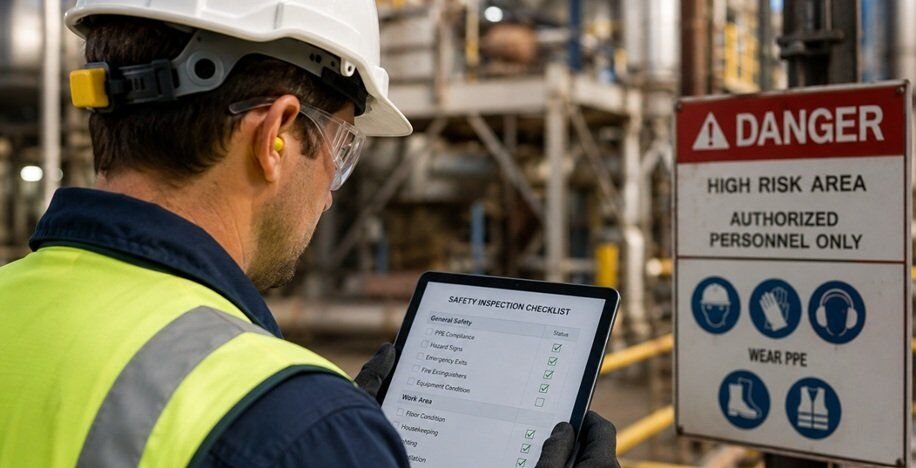
Walk into a busy industrial site and you’ll feel it immediately. The hum of machinery, the clatter of tools, the constant movement of people navigating a space full of potential hazards. It’s controlled chaos, and keeping it safe is no small feat.
If you manage or work in a high-risk environment, you already know that good intentions aren’t enough. What you need are real systems: structured monitoring, thorough inspections, and checklists that actually get used. This article breaks down what those look like in practice and why they matter more than most people realise.
What Is Workplace Monitoring and Why Should You Care?
Workplace monitoring is the ongoing process of observing, measuring, and reporting on conditions in your environment. It sounds straightforward, but it’s one of those things that’s easy to let slide until something goes wrong.
Think of it this way: monitoring is what helps you catch a frayed electrical cable before it causes a fire, or notice that noise levels in a fabrication area are creeping up to dangerous heights. It closes the gap between the safety policies you have on paper and the reality of what’s happening on the floor.
More importantly, it builds a culture. When monitoring is routine and visible, workers start to see safety as part of the job, not something management tacks on as an afterthought.
The Risks Hiding in Plain Sight
Every workplace has hazards. In high-risk settings, those hazards are just more varied and often more severe. We’re talking about things like:
- Slips, trips, and falls from cluttered walkways
- Noise exposure in heavy machinery environments
- Chemical and substance hazards
- Electrical safety risks
- Manual handling injuries
- Fire hazards
- Workplace transport dangers
- Psychological stress from high-pressure workloads
Some of these are obvious. Others build up quietly over time. That’s exactly why regular, systematic monitoring is so critical, because what you don’t see can still hurt someone.
Workplace Inspections: More Than Just a Walkthrough
A workplace inspection is a structured and intentional review of a worksite conducted to detect hazards, assess existing safety measures, and ensure compliance with legal and regulatory requirements. It’s more structured than general monitoring and requires proper planning to be effective.
Here’s what a solid inspection process looks like:
Plan Before You Walk
Before anyone steps onto the floor with a clipboard, you need a plan. Which areas are you covering? What are the priority hazards? Who’s coming along? Including a mix of supervisors, WHS Consultant representatives, and frontline workers gives you the best shot at catching what’s actually happening, not just what looks good on paper.
As a general rule, low-risk areas should be inspected at least once a year, while moderate to high-risk environments should be checked every six months or more frequently if conditions change.
Observe, Don’t Just Look
There’s a difference between walking through a site and actually watching what’s going on. A proper inspection means watching people interact with equipment, noticing how tasks are actually performed versus how they’re supposed to be, and paying attention to the environment including lighting, ventilation, housekeeping, and emergency exits.
Document Everything
A finding you don’t write down might as well not exist. Good documentation captures what hazards were found, where, what the likely cause is, and what corrective action is recommended. Over time, this creates a paper trail that helps you spot patterns and systemic problems that individual inspections might miss.
Follow Up, Always
This is where most safety programs fall apart. Identifying a hazard is only useful if someone acts on it. Assign responsibility, set a deadline, and check back to confirm it was resolved. Without follow-up, inspections become box-ticking exercises that don’t actually make anyone safer.
Checklists: Simple Tools That Do Heavy Lifting
Checklists sometimes get dismissed as basic, but in high-risk environments, they’re genuinely powerful. A well-designed checklist takes the cognitive load off inspectors. Instead of trying to remember every possible hazard, they work through a structured guide that ensures nothing gets overlooked.
A strong checklist covers three key areas:
- Environment: Lighting, temperature, ventilation, noise levels, housekeeping, and emergency access points.
- Equipment and Tools: Machine guards, maintenance records, electrical integrity, calibration status, and safety devices.
- Processes and Practices: Workflows, ergonomic risks, PPE usage, and compliance with safe operating procedures.
One important note: checklists should be tailored to your specific workplace. A chemical processing plant needs different checkpoints than a logistics warehouse. The best checklists are developed with input from the people doing the work, because they know where the real risks are.
Turning Findings Into Action: The Hierarchy of Hazard Controls
Finding hazards is just the beginning. The real work is deciding what to do about them and doing it effectively. The Hierarchy of Hazard Controls gives you a structured way to think through your options, prioritising solutions that actually eliminate or reduce risk rather than just managing it:
- Elimination: get rid of the hazard entirely if you can
- Substitution: swap it for something safer
- Engineering Controls: use physical barriers or systems to separate people from the hazard
- Administrative Controls: change the way work is done through policies, training, or scheduling
- Personal Protective Equipment (PPE): the last line of defence, not the first
If your inspections keep flagging ergonomic injuries from a particular task, handing out wrist braces isn’t the best fix. Redesigning the task or the workstation is. Working through the hierarchy keeps you focused on sustainable solutions.
Safety Is a Team Sport
One of the most common mistakes organisations make is treating safety as the sole responsibility of the workplace safety manager. In reality, effective inspections and monitoring rely on contributions from across the team:
- Safety Representatives bring regulatory knowledge and hazard expertise
- Supervisors understand the operational realities and workflow pressures
- Frontline Workers see things every day that no one else does
When workers feel like their input actually matters, they’re more likely to speak up when something doesn’t look right, even between scheduled inspections. That kind of proactive reporting is worth more than any checklist.
Using Technology to Work Smarter
Digital tools have made safety monitoring significantly more manageable. Mobile inspection apps, digital checklists, and incident reporting platforms mean data is captured in real time, findings can be assigned instantly, and trend analysis is no longer a manual headache.
If you’re still running inspections on paper and chasing spreadsheets, it might be worth exploring what digital options are available. The time savings alone can be significant, and the visibility into recurring issues is often eye-opening.
The Bottom Line
High-risk workplaces demand a proactive approach to safety, not a reactive one. Monitoring, inspections, and well-designed checklists aren’t just compliance requirements; they’re the systems that keep people from getting hurt.
The organisations that get this right aren’t necessarily the ones with the biggest safety budgets. They’re the ones that take it seriously at every level, involve the right people, follow through on what they find, and keep improving over time.
If you’re looking to strengthen your safety framework, start with the basics: consistent monitoring, regular inspections, and checklists built for your actual workplace. From there, everything else becomes easier.
You may also like to read,