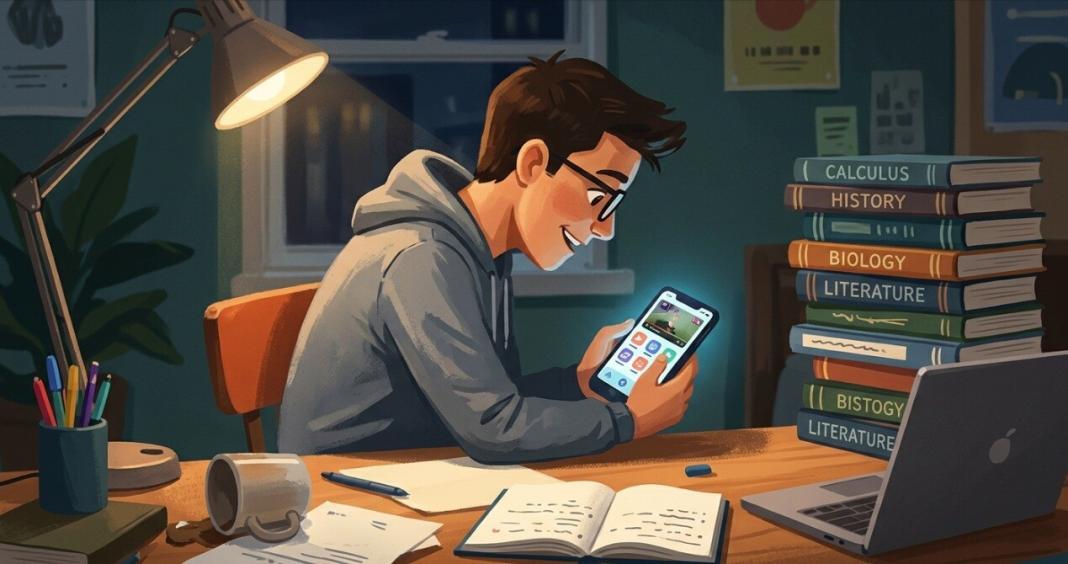
A student sits down to do homework, opens a laptop, and promises to start working in five minutes. Then a notification appears. One reply turns into several minutes of browsing, and before long, the student has lost focus. When they return to the assignment, they need time to concentrate again.
Situations like this are increasingly common in a world where smartphones, tablets, and computers play an important role in education and everyday life. Digital devices offer convenient ways to learn, explore, and express creativity. However, they can also distract students and make it harder to concentrate on their studies.
Academic success depends on more than the amount of time students spend in front of screens. It also depends on how they use technology, the activities they engage in, and how well they balance studying, sleeping, physical activity, and relaxation.
The goal is not to eliminate screen time altogether. Instead, students and parents should understand how digital habits affect learning and develop routines that support academic performance.
How Screen Time Affects Students’ Learning
Students have many opportunities to decide how to use the technology available to them. They can use digital devices to learn new concepts, complete assignments, conduct research, or spend time on entertainment and social media.
When students use technology purposefully, it can support their education. Online lessons, educational videos, digital libraries, and interactive learning applications can help explain complicated topics and provide access to information beyond the classroom.
However, frequently switching between educational tasks, social media, videos, and messages can interrupt concentration. Notifications and the temptation to check other applications may cause students to lose track of their work.
For example, a student who spends 30 minutes solving mathematics problems without unnecessary interruptions may complete more work than a student who repeatedly stops to check messages. The difference is not necessarily the time spent using a device but how effectively that time is used.
Students can benefit from setting a clear goal before opening a device. If they are using a laptop to complete an assignment, keeping unrelated applications and notifications out of sight can help them stay focused.
Educational Screen Time vs. Leisure Screen Time
Not all screen time serves the same purpose. Educational activities and recreational activities can affect students’ daily routines in different ways.
Educational screen time includes attending online classes, watching subject-related lessons, researching assignments, reading digital books, and practising through learning applications. These activities can support understanding when they are appropriate for the student’s age, learning needs, and educational goals.
Digital tools can also make lessons more engaging by using illustrations, animations, simulations, and interactive exercises. Students may use these resources to revisit difficult topics and learn at their own pace.
Leisure screen time includes activities such as watching entertainment videos, browsing social media, playing games, and chatting with friends. These activities can provide enjoyment and opportunities to connect with others. However, they may become a problem when they regularly displace homework, sleep, physical activity, or family time.
The distinction is not always clear-cut. A student may learn something useful from an online video, while an educational application may not be helpful if the student uses it without a clear purpose.
Parents and students should therefore consider the purpose, quality, timing, and duration of screen use rather than treating every screen-based activity as either beneficial or harmful.
How Excessive Screen Time Can Affect Concentration
Concentration plays an important role in academic performance. Students need to listen to teachers, follow instructions, take notes, understand concepts, and remember information.
Digital distractions can make these tasks more difficult. A student writing a research paper may repeatedly switch to social media or messaging applications. Each interruption can break the flow of thought and require the student to work out where they left off.
Frequent task-switching can also make assignments take longer than expected. Students may believe they have spent an hour studying when much of that time was divided between schoolwork and unrelated activities.
Creating a comfortable study environment can help reduce these distractions.
Students can try the following practices:
- Silence unnecessary notifications: Turn off alerts from social media and messaging applications during study sessions.
- Keep unrelated devices away: Place a phone out of reach when it is not required for the assignment.
- Set a specific study goal: Decide what needs to be completed before beginning.
- Study in manageable sessions: Break longer assignments into smaller tasks and take short breaks when needed.
- Avoid unnecessary multitasking: Focus on one academic task instead of switching repeatedly between applications.
These habits can help students use their study time more effectively without requiring them to give up technology entirely.
The Effect of Screen Use on Sleep and Memory
Sleep is another important factor in students’ ability to learn. Adequate sleep supports attention, memory, emotional regulation, and readiness to learn.
Using digital devices late at night can interfere with healthy sleep routines. Engaging videos, online conversations, games, and notifications may encourage students to stay awake longer than intended. Screen use close to bedtime may also make it harder for some students to settle down and fall asleep.
When students do not get enough sleep, they may feel tired in class, struggle to concentrate, and find it harder to remember what they have learned.
A consistent bedtime routine can help address these problems. Students can choose a reasonable time to stop gaming, watching videos, or chatting online. They can also prepare their school materials for the next day and create a calm sleeping environment with fewer digital distractions.
Parents can support these habits by establishing realistic family routines and following them consistently.
It is also important to remember that sleep is not wasted study time. Rest helps students prepare for the next day’s learning. Staying awake longer to study or use a device may be counterproductive if it consistently reduces the amount of sleep they need.
For additional practical advice, students and parents can explore these 3 great tips for a better sleep.
How Screen Habits Affect Homework and Time Management
Excessive recreational screen use can interfere with students’ daily routines, particularly when it replaces time planned for homework.
Short periods of video watching or social media browsing can gradually extend into much longer sessions. Students may postpone assignments, rush through their work, or stay up late to finish tasks. This can contribute to avoidable mistakes and additional stress the following day.
Developing time-management skills can help students balance their responsibilities and leisure activities.
One practical approach is to create a daily schedule that includes:
- Time for schoolwork and revision.
- Short breaks between demanding tasks.
- Time for exercise and outdoor activities.
- Time for entertainment and social interaction.
- A consistent bedtime.
Large assignments can be divided into smaller, manageable tasks. For example, a student writing an essay might first research the topic, then prepare an outline, write the first draft, and finally review the work.
During study sessions, students can turn off entertainment notifications and keep unrelated applications closed. When taking a break, they can choose an activity that helps them relax without making it difficult to return to their work.
The objective is not to remove flexibility from students’ lives. It is to help them make conscious choices about how they spend their time.
Screen Time Practices That Promote Healthy Use
Digital technology is part of modern education, communication, and entertainment. Teaching students to use it responsibly is generally more practical than relying only on strict bans.
The following habits can help students develop a healthier relationship with their devices.
1. Set Clear Goals Before Using a Device
Before opening a laptop, tablet, or smartphone, students should identify what they want to accomplish. For example, they might plan to complete a mathematics exercise, research a science topic, or attend an online lesson.
A clear purpose makes it easier to recognise when device use has moved away from the original task.
2. Reduce Digital Distractions
Students can silence unnecessary notifications, close unrelated browser tabs, and avoid keeping social media open while studying.
If a device is needed for schoolwork, students do not have to avoid it entirely. They can simply make it easier to concentrate on the task at hand.
3. Distinguish Learning From Entertainment
Students should consider whether their current activity supports their goals. Watching a lesson or reading a digital textbook is different from repeatedly switching between entertainment videos and messages.
However, leisure activities also have a place in a balanced routine. The aim is to ensure that recreational screen use does not consistently interfere with important responsibilities.
4. Make Physical Activity Part of the Day
Spending long periods sitting in front of screens can leave students with less time for movement and outdoor activities.
Walking, playing sports, cycling, spending time outdoors, and enjoying family activities can provide a healthy balance to screen-based routines. Physical activity can also offer a useful break from academic work.
5. Establish Screen-Free Bedtime Habits
Students can benefit from a regular bedtime and a routine that reduces stimulating activities before sleep.
Keeping smartphones and gaming devices away from the bed may help reduce late-night distractions. Parents can encourage these habits by explaining their purpose and following similar practices themselves.
6. Review Screen Habits Regularly
Instead of setting arbitrary limits without discussion, families can review how devices are being used and whether current routines are working.
If a student frequently misses homework deadlines, sleeps too little, or struggles to concentrate because of recreational screen use, the family can agree on practical changes and review the results.
The best routine will depend on the student’s age, school schedule, learning needs, and other responsibilities.
How Parents Can Encourage Balanced Screen Habits
Parents play an important role in helping children develop healthy digital habits. Children may need guidance to recognise when entertainment, online communication, or gaming is taking too much time away from other activities.
Rather than imposing restrictions without explanation, parents can talk with their children about what they enjoy online, what distracts them, and what makes it difficult to complete their schoolwork.
Together, they can establish clear and realistic family rules. These might include keeping phones away during homework, limiting recreational device use at bedtime, and setting aside time for meals, exercise, and family interaction.
Parents may also consider digital wellbeing or parental-control tools that help manage screen time, review application use, or set age-appropriate restrictions. Tools such as TheOneSpy, OneLite, OgyMogy, and FonSee are examples of products marketed for monitoring or managing device activity. Families should independently assess their features, reliability, privacy practices, security, and suitability before choosing any such service.
Monitoring tools should not replace communication and trust. Children should understand why a tool is being used, what information it collects, and which boundaries apply. Parents should also respect children’s developing independence and privacy in an age-appropriate way.
Teachers can contribute by establishing clear classroom rules for device use and helping students understand when technology supports learning and when it becomes a distraction.
A consistent approach across home and school can help students develop responsible habits that they can maintain as they grow older.
A Simple Daily Routine for Better Screen-Time Balance
Students and parents who are unsure where to begin can start with a few manageable changes.
| Situation | Practical habit |
|---|---|
| Before homework | Decide which task to complete and prepare the necessary materials. |
| During study time | Silence unnecessary notifications and close unrelated applications. |
| Between study sessions | Take a short break, stretch, or walk around. |
| During leisure time | Enjoy games, videos, or social media without neglecting other responsibilities. |
| Before bedtime | Stop stimulating activities early enough to follow a consistent sleep routine. |
| At the end of the week | Review what worked and adjust the routine if necessary. |
This routine is a starting point rather than a universal prescription. Students can adapt it to their age, schoolwork, extracurricular activities, and family circumstances.
Small, consistent changes may be easier to maintain than attempting to change every digital habit at once.
Final Thoughts: Finding a Balance for Better Academic Performance
The relationship between screen time and academic performance depends on several factors, including the purpose of device use, the frequency of interruptions, sleep habits, and the time available for studying and other activities.
Technology can support learning by providing access to educational resources, interactive lessons, and research materials. However, recreational screen use can become a problem when it regularly interrupts concentration, delays homework, or reduces sleep.
There is no single screen-time limit that is appropriate for every student and every situation. Age, individual needs, the type of activity, and the effect on daily life all matter.
Parents and students can begin by identifying the habits that cause the most difficulty and making realistic changes. Practical steps include turning off notifications during homework, setting a consistent bedtime, and balancing digital entertainment with physical activity.
Ultimately, the goal is not to eliminate screens but to use them purposefully. When students learn to manage digital distractions and maintain balanced routines, they can enjoy the benefits of technology while making time for their education, health, relationships, and personal development.
You may also like to read,
- 10 Effective Ways to Complete Homework Faster with Online Tutoring Support
- How to Build an Effective Bedtime Routine for Better Sleep
- 7 Parenting Tips to Improve Children’s English Language Skills and Overcoming Obstacles