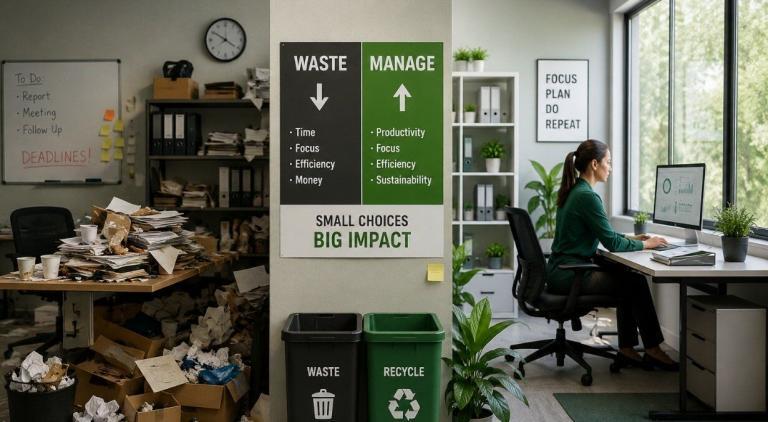


A clean and organised workplace helps employees perform their responsibilities efficiently. Whether it is an office, warehouse, construction site, retail store or commercial property, effective waste management plays an important role in maintaining smooth daily operations.
When rubbish accumulates, bins overflow or waste is not collected on time, employees can face unnecessary interruptions. Cluttered workspaces, unpleasant smells, blocked walkways and safety hazards can affect concentration, delay tasks and create an uncomfortable working environment.
For businesses in Darwin, having a reliable waste management plan can help maintain organised premises and support more efficient operations. Understanding the connection between workplace cleanliness and productivity is an important step towards creating a better working environment.
1. Cluttered Workspaces Waste Employees’ Time
Workplace clutter can make everyday tasks more difficult. Unwanted materials, empty boxes, packaging and rubbish occupying work areas reduce the available space employees need to perform their responsibilities.
Employees may also spend valuable working time moving discarded materials, searching for equipment or clearing areas before starting their tasks.
For example:
- Warehouse employees may struggle to move goods around blocked storage areas.
- Office staff may lose time clearing shared workspaces.
- Construction workers may need to remove debris before continuing their work.
- Retail employees may find it difficult to organise stock when storage areas are cluttered.
A regular waste collection routine helps maintain organised workspaces and allows employees to concentrate on their primary responsibilities.
For households and small workplace clean-ups in Darwin, businesses and residents can book a household skip bins in Darwin to manage suitable rubbish and keep their surroundings clear.
2. Poor Waste Management Can Create Workplace Safety Risks
Workplace safety is closely connected to how materials and waste are stored and handled. Rubbish left in unsuitable locations can create hazards for employees, customers, contractors and visitors.
Loose materials, broken items, overflowing bins and blocked walkways may increase the risk of slips, trips and other workplace incidents.
Common examples include:
- Cardboard and packaging left on walkways.
- Sharp materials placed in general waste containers.
- Construction debris scattered around work areas.
- Waste blocking emergency access points.
- Liquid spills that are not cleaned promptly.
Businesses can reduce these risks by providing suitable waste containers, establishing clear disposal procedures and inspecting work areas regularly.
A safer workplace also helps prevent disruptions caused by injuries, damaged equipment and unplanned work stoppages.
3. Unpleasant Smells Can Affect Employee Comfort
Food scraps and general rubbish can produce unpleasant smells when waste is not removed regularly. This can become particularly noticeable in kitchens, staff rooms, warehouses, restaurants and commercial buildings.
An uncomfortable environment can affect employees’ experience at work and create a negative impression among customers and visitors.
Businesses can minimise these problems by following simple housekeeping practices:
- Empty rubbish bins regularly.
- Store food waste in suitable containers.
- Keep waste storage areas clean.
- Separate recyclable materials where possible.
- Arrange timely waste collection.
- Avoid allowing rubbish to accumulate over several days.
Maintaining clean waste storage areas contributes to a more comfortable workplace and supports better everyday working conditions.
4. Delayed Waste Removal Can Interrupt Daily Operations
Many businesses generate waste continuously throughout the working day. When waste collection is not planned properly, accumulated rubbish can interfere with normal business activities.
For instance, a construction team may run out of space for building materials, while a warehouse may struggle to receive new stock because discarded packaging occupies valuable storage space.
These situations can result in:
- Delays in completing daily tasks.
- Reduced storage and working space.
- Additional manual handling.
- Disorganised work areas.
- Unnecessary interruptions for employees.
Businesses should plan waste removal according to the amount and type of rubbish they generate.
For larger workplace clean-ups and commercial projects, commercial waste removal Darwin services can help businesses manage unwanted materials and prevent waste from accumulating around their premises.
5. Poor Waste Segregation Can Increase Business Costs
Effective waste segregation helps businesses manage disposal more efficiently. Mixing different materials can complicate collection and recycling because cardboard, timber, metal, concrete, green waste and general rubbish may have different disposal requirements.
When recyclable materials are mixed with unsuitable waste, they may become contaminated. Businesses may also face additional handling or disposal charges depending on the waste type and service provider.
A practical waste segregation system can include:
- Separate containers for general rubbish.
- Dedicated recycling bins for cardboard and paper.
- Suitable collection arrangements for metal and timber.
- Separate storage for green waste.
- Approved disposal methods for hazardous materials.
Clearly labelled containers help employees understand where different materials should be placed. This reduces confusion, supports recycling and makes waste handling more organised.
6. Poor Waste Management Can Affect Employee Morale
Employees generally prefer working in clean, organised and comfortable environments. When rubbish is regularly left around the workplace, staff may become frustrated and less satisfied with their working conditions.
Employees may also be required to spend time dealing with avoidable housekeeping problems instead of concentrating on their assigned responsibilities.
Businesses can improve workplace conditions by establishing clear housekeeping expectations and assigning responsibilities.
Some useful practices include:
- Keeping individual workstations clean.
- Placing rubbish in the correct containers.
- Clearing shared areas after use.
- Reporting overflowing bins.
- Following established waste collection schedules.
Encouraging employees to follow these practices creates a shared responsibility for workplace cleanliness and supports a more organised working environment.
7. Construction and Renovation Waste Can Reduce Productivity
Construction sites and commercial renovation projects can generate significant quantities of waste, including timber, concrete, bricks, plasterboard, metal and packaging.
When these materials are not managed properly, they can reduce available working space and make it harder for workers to move equipment, transport materials and complete scheduled activities.
Businesses undertaking construction or renovation work should plan waste disposal before the project begins.
Skip bin hire for commercial waste Darwin can be a practical option for collecting suitable construction and renovation materials in one designated location.
Before arranging a skip bin, businesses should consider:
- The type of waste being produced.
- The estimated quantity of material.
- The required bin size.
- Weight limits and accepted materials.
- Delivery and collection schedules.
- Available space for positioning the bin.
Choosing an appropriate waste container and planning collections in advance can help maintain an organised project site and reduce unnecessary interruptions.
8. How Regular Skip Bin Hire Can Support Workplace Productivity
Some businesses generate more waste than standard office or commercial bins can accommodate. This commonly occurs during warehouse clear-outs, office relocations, property maintenance, construction projects and large commercial clean-ups.
In these situations, commercial skip bin hire Darwin can help businesses manage larger quantities of suitable waste.
Using an appropriately sized skip bin can offer several practical benefits:
- Provides a designated location for unwanted materials.
- Helps reduce rubbish around working areas.
- Makes larger clean-up activities easier to organise.
- Supports planned waste collection.
- Helps employees maintain clearer workspaces.
Businesses should select a bin based on their waste type, expected volume and project requirements. It is also important to confirm accepted materials, loading restrictions and collection arrangements with the provider before booking.
9. Compare Waste Removal Services Before Booking
Selecting a suitable waste removal provider is an important part of managing workplace operations and disposal costs.
Businesses should compare available services rather than choosing a provider based only on the advertised price.
When searching for affordable skip bin hire Darwin, consider the following:
- What bin sizes are available?
- Which waste materials are accepted?
- Are delivery and collection included?
- Are there weight limits?
- What is the standard hire period?
- Are additional charges clearly explained?
- Does the provider offer services suitable for commercial projects?
Businesses can also visit SkipBin Compare to explore skip bin options and compare providers.
Comparing available services helps businesses identify a waste disposal arrangement that suits their project requirements and budget.
10. Create a Better Workplace Waste Management Plan
An effective waste management plan does not have to be complicated. Businesses can prevent many common problems by establishing simple procedures and reviewing them regularly.
Here are six practical steps:
Conduct regular workplace checks: Inspect work areas, storage rooms, kitchens and outdoor spaces to identify waste that needs attention.
Provide suitable waste bins: Place clearly labelled containers in convenient locations so employees can dispose of materials correctly.
Set a collection schedule: Arrange waste removal according to the volume and type of rubbish your business generates.
Train employees: Explain waste segregation requirements and safe disposal practices to staff members.
Monitor waste costs: Review collection frequency, disposal charges and opportunities to reduce unnecessary waste.
Choose a suitable provider: Work with a waste management service that understands your business requirements and can accommodate your collection needs.
Regular reviews help businesses identify problems early, improve housekeeping practices and make waste management more efficient.
Conclusion
Poor waste management can affect workplace productivity in several ways. Cluttered workspaces, safety risks, unpleasant smells, delayed collections and inefficient waste segregation can interrupt daily operations and create unnecessary work for employees.
Businesses can reduce these problems by maintaining organised workspaces, separating waste correctly, establishing clear housekeeping responsibilities and arranging appropriate waste collection.
Whether managing an office, warehouse, construction site or commercial property, a well-planned waste management system contributes to a cleaner, safer and more efficient working environment.
For businesses looking for waste disposal solutions, Genie Skip Bins provides skip bin hire services for different waste management needs. Choosing a suitable bin and planning collections in advance can help keep workplaces organised and allow employees to focus on their work.
You may also like to read,
- 7 Rubbish Collection Methods for Better Recycling Practices
- The Hidden Productivity Cost of Poor Workplace Waste Management
- How to Reduce Waste in Your Business and Improve Environmental Sustainability
- How to Recycle Food Waste Without a Backyard Using Modern Composting Machines and Collection Services
Discover practical ways to manage your time, improve focus and accomplish meaningful work.
Explore the GuideWas this article helpful?
Your feedback helps us improve.