

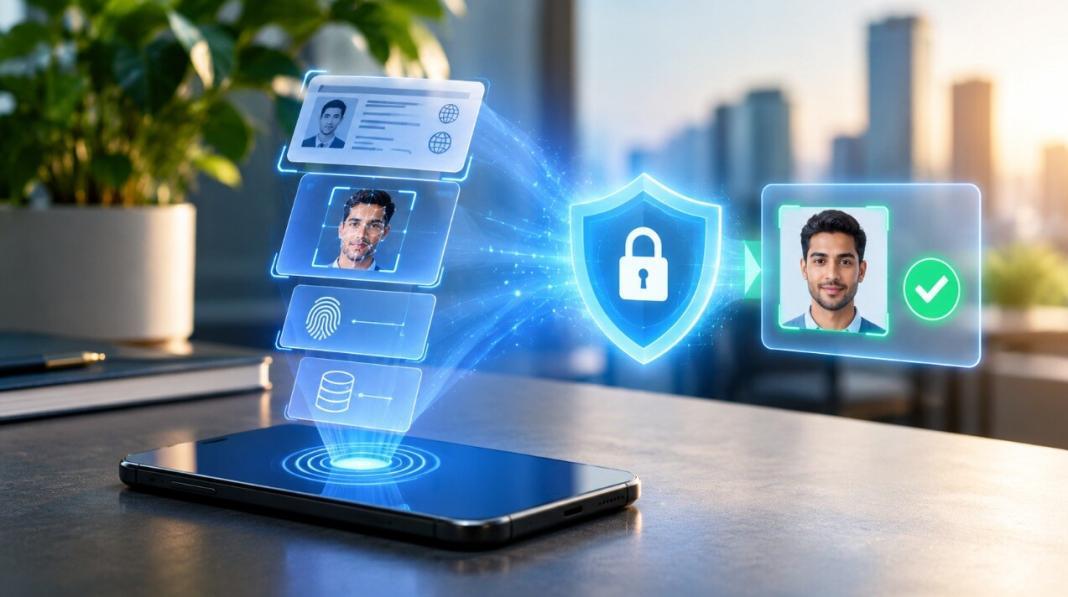
Digital services have made it easier for customers to open accounts, make payments, access services, and complete transactions without visiting a physical location. However, the same convenience has created new opportunities for identity fraud. Businesses must now determine whether someone accessing their services is who they claim to be, often without meeting them in person.
Digital identity verification is becoming an important part of this process. By combining identity documents, data validation, biometric checks, and risk-based security measures, businesses can assess identity claims before granting access to sensitive services.
The technology is not a complete solution to fraud. Its effectiveness depends on the quality of the verification process, the information available, and how businesses respond to suspicious activity. Understanding both its capabilities and limitations is essential for organizations adopting digital identity systems.
Why Digital Identity Verification Matters
Identity fraud can affect businesses across several industries. Financial institutions may face fraudulent account applications, e-commerce companies may encounter payment fraud, and digital service providers may experience unauthorized account access.
The Federal Trade Commission’s Consumer Sentinel Network Data Book 2024 recorded more than 1.1 million identity theft reports. The FTC also reported that consumers lost more than $12 billion to fraud during 2024. These figures demonstrate the scale of reported fraud, although they do not measure every incident or establish that identity verification alone could have prevented these losses.
Source: Federal Trade Commission, Consumer Sentinel Network Data Book 2024
For businesses, the consequences can extend beyond financial losses. Fraud incidents may lead to customer complaints, regulatory scrutiny, operational disruption, and reduced confidence in digital services.
Identity verification helps address one important question at the beginning of a digital interaction: does the information provided by an applicant correspond to a real person, and is that person presenting the evidence legitimately?
The answer requires more than checking whether a document looks genuine. Businesses must consider the entire identity verification process.
Understanding the Difference Between Identity Proofing and Authentication
Identity proofing and authentication are closely related, but they serve different purposes.
Identity proofing takes place when a business establishes confidence in a person’s claimed identity. During digital onboarding, this may involve checking an identity document, validating information against an authoritative source, or confirming that the applicant is associated with the evidence provided.
Authentication takes place when an existing user attempts to access an account. It determines whether the person can demonstrate control of an approved authenticator, such as a password, security key, or passkey.
The distinction matters because successful identity verification during onboarding does not guarantee that an account will remain secure. An account may later be compromised through phishing, credential theft, or social engineering.
The National Institute of Standards and Technology (NIST) addresses identity proofing, authentication, and federation separately in its Digital Identity Guidelines. Its framework provides a useful reference for businesses designing identity systems around different levels of risk.
Source: NIST, Digital Identity Guidelines
How Digital Identity Verification Works
Digital identity verification generally involves several complementary checks. Businesses do not necessarily need to use every method for every customer. The appropriate approach depends on the service, the potential consequences of fraud, and the applicable requirements.
1. Identity Document Verification
Customers may be asked to submit a passport, driving licence, or another recognized identity document.
Verification systems can examine document information, check security features, and assess whether the submitted image appears to have been altered. Optical character recognition (OCR) can extract information such as a person’s name, date of birth, and document number.
Automated checks can reduce the need for manual review, but they cannot guarantee that a document is genuine or that the person presenting it is its rightful owner.
2. Biometric Verification
Some identity verification systems compare a customer’s live image with the photograph on an identity document.
Facial comparison can help determine whether the person submitting the document resembles the individual represented in the photograph. Liveness detection may also be used to assess whether the interaction involves a live person rather than a photograph, video, or other presentation attack.
However, biometric verification has limitations. Lighting conditions, image quality, camera performance, and demographic differences can affect results.
The U.S. Government Accountability Office has identified privacy and accuracy concerns associated with commercial facial recognition, including differences in performance across demographic groups.
3. Database and Information Validation
Businesses may compare submitted information with authoritative records or trusted data sources.
Depending on the industry and applicable laws, these checks may help identify inconsistencies in names, addresses, dates of birth, or other identity attributes.
Outdated records, incomplete databases, and incorrect data can produce false matches or prevent legitimate customers from completing verification.
4. Risk-Based Verification
Not every customer interaction requires the same level of scrutiny.
A business may use a relatively simple verification process for a low-risk service while applying additional checks before approving a high-value transaction or granting access to sensitive information.
Risk-based verification may consider factors such as unusual account activity, device information, transaction patterns, and inconsistencies in submitted identity data.
This approach can help businesses balance security with customer convenience. However, risk scores should be treated as indicators requiring appropriate assessment rather than definitive proof of fraud.
Applications Across Different Business Sectors
Digital identity verification is used in several industries, although the specific requirements vary.
Banking and Financial Services
Banks and financial institutions use identity verification during customer onboarding, account opening, and certain financial transactions.
The process can support customer due diligence and help identify inconsistencies that may require further investigation. Financial institutions may also use ongoing monitoring to identify suspicious account activity after onboarding.
FinCEN has highlighted identity-related suspicious activity involving account creation, account access, and transaction processing. This demonstrates why identity controls need to extend beyond a single verification event.
Source: FinCEN, Analysis of Identity-Related Suspicious Activity
E-Commerce and Online Marketplaces
Online retailers and marketplaces may use identity-related checks to address account creation fraud, payment abuse, and suspicious seller activity.
Verification can be particularly relevant when businesses onboard third-party sellers, process high-value transactions, or manage accounts with access to sensitive customer information.
However, identity verification should work alongside payment security, transaction monitoring, and account protection measures. A verified identity does not automatically make every subsequent transaction legitimate.
Healthcare and Digital Services
Healthcare providers and digital service organizations may need to verify users before providing access to personal records or sensitive information.
Identity verification can help reduce the risk of unauthorized access, while authentication measures can protect accounts during subsequent visits.
Organizations should also consider the accessibility of their verification processes. Customers may have limited access to technology, difficulties presenting documents, or legitimate reasons for having incomplete records.
Digital Platforms and Software Businesses
Businesses offering online platforms may use identity verification to establish customer accounts, manage access permissions, and reduce fraudulent registrations.
The appropriate approach depends on the service. A platform providing access to sensitive financial information may require stronger verification than a service offering general informational content.
The objective should be to apply security measures proportionate to the potential harm associated with unauthorized access.
The Role of Artificial Intelligence in Identity Verification
Artificial intelligence is increasingly used to support identity verification and fraud detection.
Machine learning systems can analyze patterns across large volumes of information, identify unusual activity, and help prioritize cases for manual review. Computer vision techniques can also assist with document analysis and facial comparison.
These capabilities may help businesses process applications more efficiently. However, the presence of AI does not automatically make a verification system more accurate or secure.
AI systems depend on the quality and representativeness of their training data. They may also produce false positives, incorrectly flagging legitimate customers, or false negatives, allowing fraudulent activity to go undetected.
A case study published by Tecpinion examines the use of AI in an iGaming operator’s operational processes, including identity verification and fraud-related workflows. It provides an industry example of how AI-based systems may be applied in practice.
Privacy and Security Challenges
Digital identity verification can improve security, but it also creates risks when businesses collect and process personal information.
Identity documents, facial images, biometric templates, and personal records are sensitive forms of data. If they are stored unnecessarily or inadequately protected, they may become targets for cyberattacks or unauthorized access.
Businesses should consider several safeguards.
Data minimization: Collect only the information necessary for the verification purpose.
Limited retention: Establish clear retention periods and securely delete information when it is no longer required.
Access controls: Restrict access to identity information based on job responsibilities.
Transparency: Explain what information is collected, why it is required, and how it will be used.
Human review: Provide an appropriate review process when automated verification produces an uncertain or adverse result.
Biometric systems also raise concerns about consent, surveillance, and the potential reuse of collected information. The Government Accountability Office has highlighted these issues in its research on commercial facial recognition technology.
Privacy should therefore be considered during system design rather than treated as a separate compliance task after implementation.
Balancing Fraud Prevention with Customer Experience
A verification system that prevents fraud but unnecessarily excludes legitimate customers can create operational and reputational problems.
For example, a customer may fail an automated check because of poor lighting, an outdated document, a spelling discrepancy, or a technical issue. Such a result does not necessarily indicate fraudulent intent.
Businesses should establish alternative verification methods and escalation procedures for cases that cannot be resolved automatically.
They should also measure more than the number of fraudulent applications detected. Useful performance indicators may include:
- Verification completion rates
- False acceptance and false rejection rates
- Average verification time
- Manual review volumes
- Customer complaints
- Fraud losses associated with verified accounts
These measures provide a more balanced view of whether an identity verification system is achieving its intended objectives.
What Businesses Should Consider Before Adopting Digital Identity Verification
Selecting an identity verification system requires an assessment of business requirements, regulatory obligations, and operational risks.
Organizations should evaluate the accuracy of the technology under realistic conditions, the quality of its data sources, its privacy safeguards, and the availability of alternative verification methods.
They should also examine how the system handles failed checks, how decisions can be reviewed, and whether its performance can be monitored over time.
NIST’s Digital Identity Guidelines provide a useful starting point for organizations assessing identity proofing and authentication requirements. However, businesses must also consider the laws and regulatory obligations applicable to their specific operations.
Digital identity verification is most effective when it forms part of a broader security framework that includes authentication, access controls, fraud monitoring, incident response, and appropriate governance.
Conclusion
Digital identity verification is changing how businesses establish trust in online interactions. Document validation, biometric comparison, data checks, and AI-assisted risk assessment can help organizations identify suspicious activity and protect customer accounts.
However, these technologies are not without limitations. Privacy concerns, inaccurate results, demographic differences, and evolving fraud techniques require businesses to evaluate their systems continuously.
The most effective approach is not to rely on a single verification method, but to combine proportionate identity checks with strong authentication, transparent data practices, and appropriate human oversight.
You may also like to read,
- How Trusted User Identity Verification is important to Counter Frauds in the Financial Sector
- Online Address Verification – Securing The Financial Industry from Rising Frauds
- Documents Verification Online: Combating Identity Fraud in the Business World
Build practical digital skills to work smarter, solve problems and grow professionally.
Was this article helpful?
Your feedback helps us improve.