Introduction
The oil and gas industry is among the most challenging and dangerous industries in the world. Plus exploration and drilling, a company has to deal with transportation and distribution, which are very demanding tasks. They have to be very careful and efficient at all times because the operations are very large. With the increase in global energy demand and the increase in different operational challenges, traditional systems will no longer be capable of keeping up with maintaining efficiency and competitiveness.
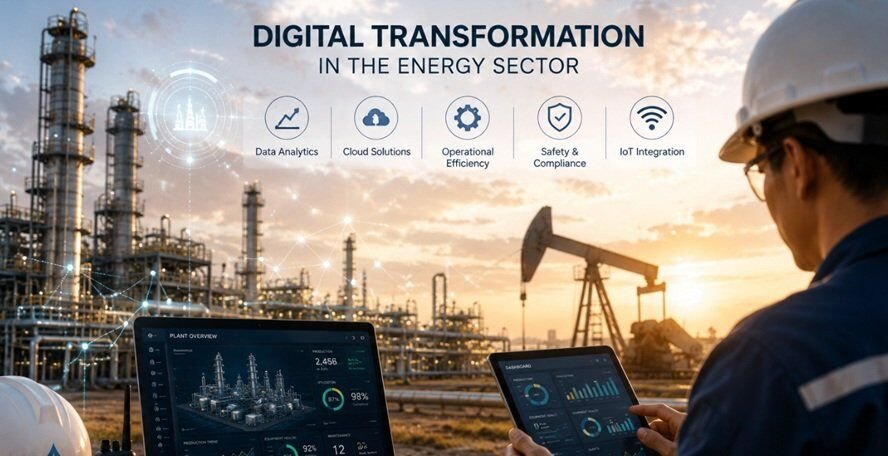
Oil and Gas Software Development is such a big part of the solution. Digitizing processes is a way to help streamline operations, monitor assets, enhance decision-making, and diminish risks. When energy companies incorporate automation, analytics, and real-time visibility of data into software systems, they obtain a tool through which they can optimize processes in the whole value chain.
With digital transformation speeding up in various industrial sectors, oil and gas companies are committing more and more funds into advanced software solutions for modernizing their infrastructures and enhancing operational performance.
What Is Oil and Gas Software Development?
Oil and Gas Software Development means building specialized digital systems that cater to the complex operational, analytical, and management requirements of energy companies. These platforms are developed to efficiently handle complicated workflows in the areas of upstream, midstream, and downstream operations.
Tailored software products are capable of overseeing activities like drilling operations, pipeline monitoring, inventory management, field service coordination, predictive maintenance, and compliance reporting.
Compared to off-the-shelf enterprise systems, oil and gas software is designed More exactly for industry-related needs. Such software works hand in hand with operational technologies, field equipment, and enterprise systems to establish a unified digital environment.
The objective is to enhance the understanding of the operations, minimize the waste of resources, and enable data-driven decision-making throughout the energy operations.
The Growing Importance of Digital Innovation in Oil and Gas
Some of the biggest challenges the oil and gas industry is dealing with right now are the impact of raising and falling oil prices, heavy and tightening regulations, equipment that comes to a stop, and the increase of running and maintenance costs, among others. It is quite hard to resort to manual handling of these issues or to different systems that don’t communicate with each other, since it could only lead to delays and limited visibility.
Oil and Gas Software Development is one of the tools organizations choose to work with to make their workflows up-to-date and also to increase the level of coordination between teams, assets, and oil and gas facilities.
Real-time monitoring systems are a good way to keep a check on field operations and equipment. Automated workflows, however, not only save us from spending time on doing the same thing over and over again but also help in maintaining consistency in operations.
Going digital has been a game-changer for the oil and gas industry in that it has made it possible for companies to react faster to changes in the market as well as in their plants’ operations. Because they have a higher level of data access, organizations may be able to carry out faster and better-informed decision-making.
Core Features of Oil and Gas Software Solutions
Contemporary energy activities necessitate interconnected systems capable of managing assets, enhancing workflows, increasing operational visibility, and enabling decision-making in real-time.
Advanced digital platforms not only support production oversight but also foresee maintenance needs, thereby facilitating optimization of the entire operational chain for the oil and gas sector. The highlights below lay down the basics of the most efficient Oil and Gas Software Development solutions.
Real-Time Asset Monitoring
Track equipment health and operational performance through connected systems and live data visibility.
Production Management Systems
Monitor extraction, refining, and distribution processes to improve operational efficiency and output control.
Inventory and Supply Chain Management
Manage materials, spare parts, and logistics workflows with centralized inventory tracking.
Predictive Maintenance Capabilities
Identify equipment issues early using analytics and automated maintenance scheduling.
Compliance and Regulatory Reporting
Simplify audit preparation and ensure adherence to environmental and operational regulations.
Workflow Automation
Automate repetitive operational processes to reduce manual effort and improve coordination.
Data Analytics and Reporting
Generate actionable insights through real-time dashboards and operational performance reports.
Enterprise System Integration
Connect field operations with ERP, IoT, and enterprise platforms for seamless data synchronization.
Improving Operational Efficiency
Efficiency matters a lot in the oil and gas industry because even the slightest delay can cause a big loss of money. Manual processes and old systems are the main source of inefficiencies that reduce productivity.
Automation of scheduling and workflow management ensures better coordination between the field teams and operations departments. Real-time dashboards offer instant insight into the status of operations, allowing managers to identify and fix problems quickly.
In addition, centralized systems facilitate communication between different locations of the operations. This means better collaboration and faster decision-making.
So, by streamlining processes and minimizing manual operations, companies might enhance their operational efficiency quite a bit.
Enhancing Asset Management and Maintenance
Equipment reliability is a critical factor for success in oil and gas operations. Unscheduled equipment breakdowns can not only halt production and raise operational costs but also jeopardize safety.
Through continuous monitoring of assets and their analytics, Oil and Gas Software Development not only makes maintenance easier based on condition but also schedules maintenance before a breakdown happens.
The sensors installed on the equipment run the operations, which can recognize the performance deviations that might lead to a breakdown. The maintenance teams get notifications, and because of this, it becomes possible for them to plan the repairs promptly.
Besides, digital maintenance platforms keep a record of all services, inspections done, and each maintenance scheduling in one place.
Implementing this method lets you lower production stops, get more out of your machinery, and raise the level of reliability of the whole operation.
Strengthening Safety and Compliance
Safety and regulatory compliance rank as the top priorities in the energy sector. Companies are expected to strictly comply with environmental, operational, and workplace safety regulations.
Latest Oil and Gas Software Development tools assist enterprises in staying compliant by automatically generating reports, recording incidents, and managing audits.
Safety management platforms give businesses the ability to log workplace accidents, follow up on corrective measures, and verify compliance with standard operating procedures.
Compliance reporting software makes it easier to produce regulatory submissions and keep audit records up-to-date.
Due to enhanced safety and compliance visibility, enterprises have the option to manage hazard exposure and maintain better controls.
Real-Time Data and Analytics
Operations lack clear visibility because data remains spread across disconnected systems.
Using specialized software brings data together in one place, letting teams track performance across sites.
Dashboards show live readings on output rates, machine health, and how well processes run.
Managers see these metrics at a glance and respond faster to changes or issues.
Analysis reveals patterns, predicts risks, and helps cut waste in materials and time usage.
Integration with Enterprise and Field Systems
There are lots of different systems involved in oil and gas operations. Besides the traditional ERP software, we are talking about SCADA, IoT devices, field equipment, plants, etc. This is why, without integration, data silos can really reduce operational efficiency.
Modern oil and gas software development solutions not only integrate with your existing enterprise and operational systems but also help create a unified digital environment.
For instance, production data from the sensors in the field can be automatically synchronized with the enterprise reporting systems. Maintenance schedules may be integrated with the inventory management platforms to ensure spare parts availability.
Such a connected infrastructure improves data consistency and enables smoother workflows across various departments.
Emerging Technologies in Oil and Gas Software
Next-generation Oil and Gas Software Development will rely on initiatives like artificial intelligence, machine learning, and the Internet of Things.
For example, AI-based analytics are capable of forecasting equipment breakdown, enhancing drilling methods, and refining production estimation. Machine learning algorithms can mine past data to find operational risk and behavior patterns.
With the help of IoT-enabled gadgets, the complete monitoring of the pipeline, rigs, and storage facilities is done in real time. This not only enhances operational visibility but also enables remote control.
Besides, cloud services are increasingly being utilized in the Oil and Gas sector, which enables companies to expand their operations while ensuring secure data access from different locations.
It is predicted that as these digital technologies become more sophisticated, energy companies will carry on integrating digitally connected and intelligent systems into their operations.
Best Practices for Successful Software Implementation
To introduce new technology in the oil and gas industry, planning and implementation must be handled carefully. One way to start is by pinpointing issues in operations and setting well-defined goals for the project.
Besides, data quality and system integration are the two main issues that require attention. Without good data, it is impossible to get accurate reporting and analytics.
Training of personnel is a step often overlooked, but the change must become permanent. Employees must learn how to make the best use of the system in their everyday tasks.
In most cases, a step-by-step rollout plan is the one that gives the best results, providing an opportunity to test features and gradually improve processes.
By continuously keeping an eye on the performance and regularly updating the system, one can make sure that it brings value not only eventually but also in the future.
Conclusion: Building Smarter Energy Operations
The oil and gas sector is poised to unveil a new chapter with the introduction of digital transformation, automation, and real-time intelligence. Old-style operational methods just can’t keep up with the requirements of managing complicated and large-scale energy operations anymore.
Software Development for the Oil and Gas industry is equipping businesses with the capability to maximize their workflows, better manage their assets, ensure stricter compliance, and increase the transparency of their operations.
By employing cutting-edge technologies like AI, analytics, and IoT, cloud software solutions enable oil and gas companies to cut down on expenses, enhance safety standards, and become more readily adaptable to market changes.
With the continual development of the sector, purchasing scalable and smart digital platforms will be a must for energy operations that are not only highly productive but also resilient and prepared for the future.
You may also like to read,
- Top Trends That Will Shape Up the Oil and Gas Software Industry
- The Future of Data Analytics Services: Trends and Innovations
- Advanced Logistics Software Development for Modern Enterprises