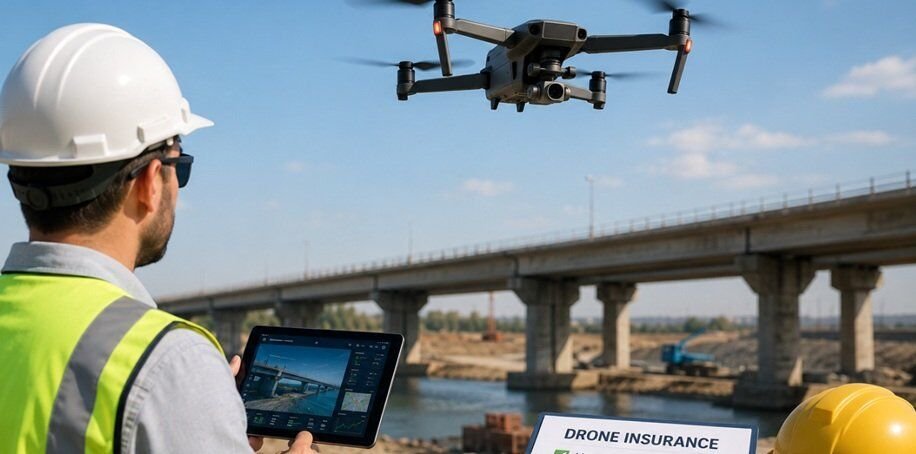
Commercial drone operations have evolved from niche applications into essential business tools across industries. Organizations now rely on drones to inspect infrastructure, monitor crops, document construction progress, capture aerial imagery, and improve operational efficiency. While these capabilities create significant opportunities, they also introduce new risks that businesses cannot afford to overlook.
A single incident involving property damage, equipment loss, or an unexpected liability claim can disrupt operations and create substantial financial setbacks. That’s why Drone Insurance has become an important part of responsible commercial drone management. Rather than viewing insurance as another operating expense, forward-thinking organizations treat it as a strategic investment that protects assets, supports compliance, and strengthens business resilience.
Understanding the available coverage options and selecting a policy that matches operational risks allows businesses to focus on growth while reducing uncertainty.
Why Drone Insurance Is Essential for Modern Businesses
As commercial drone operations become more sophisticated, the risks extend beyond replacing damaged equipment. Insurance provides broader protection that helps organizations operate with greater confidence.
Financial protection
Even experienced pilots can encounter unexpected situations. Sudden weather changes, equipment malfunctions, signal interference, or accidental collisions may result in costly repairs or complete equipment replacement.
Drone Liability Insurance can also help protect businesses from expenses arising from accidental property damage or third-party injuries. Without adequate coverage, a single incident could significantly affect operating budgets.
Legal compliance
Commercial drone regulations continue to evolve across different jurisdictions. While insurance requirements vary, many organizations, government agencies, and project owners expect operators to carry appropriate coverage before approving contracts or site access.
Having suitable Commercial Drone Insurance demonstrates professionalism and helps businesses satisfy contractual obligations more easily.
Risk management
Effective risk management goes beyond pilot training and maintenance schedules. Insurance complements operational safety by reducing the financial impact of unforeseen events that cannot always be prevented.
Businesses that integrate insurance into their broader risk management strategy are generally better prepared for unexpected disruptions.
Business continuity
Unexpected losses can interrupt projects, delay deliveries, and affect customer relationships.
Appropriate Business Drone Insurance helps organizations recover faster after incidents by reducing financial strain and supporting timely equipment replacement or repairs. This minimizes downtime and helps maintain service commitments.
Understanding Different Types of Drone Coverage
Not every policy offers identical protection. Businesses should understand how different coverage types address specific operational risks before selecting a policy.
Liability Coverage
Liability coverage is often considered the foundation of UAV Insurance.
If a drone accidentally damages a client’s property or causes injury to another person, liability coverage may help pay legal expenses, settlements, or compensation, depending on policy terms.
For example, a drone performing a roof inspection could lose stability during unexpected wind gusts and strike a nearby parked vehicle. Repair costs could quickly exceed what many businesses are prepared to pay out of pocket.
Equipment Protection
Drones often represent a significant capital investment. Professional operations may include multiple aircraft, batteries, controllers, cameras, sensors, and specialized accessories.
Equipment protection helps cover accidental damage, theft, or certain unexpected losses affecting essential operational equipment.
This type of coverage is particularly valuable for organizations operating expensive imaging systems or advanced surveying equipment.
Hull Coverage
Hull coverage specifically protects the drone itself against physical damage.
Whether caused by a hard landing, collision, or mechanical failure, repairing commercial drones can become expensive due to specialized components and calibration requirements.
Organizations operating fleets should evaluate whether hull coverage aligns with the replacement value of their aircraft.
Payload Protection
Many commercial drones carry valuable payloads, including thermal cameras, LiDAR sensors, multispectral cameras, mapping equipment, and specialized inspection tools.
Payload protection helps safeguard these high-value components, which may cost as much as—or even more than—the drone carrying them.
Businesses involved in surveying, engineering, or industrial inspections often benefit from reviewing payload coverage carefully.
Cyber and Data Risks
Modern drone operations increasingly depend on software, cloud platforms, GPS systems, and wireless communications.
As drones collect valuable operational and geographic information, cyber-related risks continue to grow. Unauthorized system access, data compromise, or software-related incidents may affect operations or expose sensitive information.
Some UAV Insurance policies now include protection for selected cyber and data-related risks, making this an increasingly relevant consideration for businesses using advanced digital workflows.
Who Needs Commercial Drone Insurance?
Commercial drones have become valuable tools across numerous industries, and insurance needs often vary depending on operational complexity and exposure.
Construction
Construction companies use drones to monitor project progress, create site documentation, inspect difficult-to-access areas, and improve communication among stakeholders.
Busy construction environments present numerous hazards, making insurance an important safeguard against accidental incidents.
Agriculture
Farmers and agricultural service providers rely on drones for crop monitoring, irrigation assessments, field mapping, and precision agriculture.
Flights often cover large areas with varying terrain, increasing operational exposure and making Business Drone Insurance a practical consideration.
Infrastructure Inspection
Bridges, highways, railways, telecommunications towers, and industrial facilities increasingly rely on drone inspections.
Operating near critical infrastructure requires careful planning, and insurance helps reduce financial exposure associated with complex inspection work.
Energy
Energy providers use drones to inspect transmission lines, pipelines, solar farms, and wind turbines.
These operations frequently occur in remote or hazardous environments where equipment recovery and replacement costs can be significant.
Public Safety
Emergency response organizations use drones for search operations, disaster assessment, traffic monitoring, and incident management.
Although safety remains the priority, insurance provides additional protection when operating in unpredictable conditions.
Surveying
Surveyors increasingly depend on drones for mapping, land development, and topographic analysis.
Since projects often involve expensive sensors and demanding flight requirements, comprehensive coverage supports long-term operational reliability.
Real Estate
Professional aerial photography has become a standard marketing tool for commercial and residential properties.
While flights are generally shorter, operators still face liability risks when working near occupied buildings and surrounding neighborhoods.
Logistics
Drone delivery and logistics operations continue to expand as organizations explore faster transportation solutions.
These evolving business models introduce additional operational and liability considerations, making Commercial Drone Insurance an essential part of responsible planning.
Factors That Affect Insurance Costs
Insurance premiums vary because every operation presents a different level of risk. Understanding these factors helps businesses make informed coverage decisions.
Drone value
Higher-value drones generally cost more to insure because replacement and repair expenses increase accordingly.
Businesses operating multiple aircraft should also consider total fleet value when evaluating coverage.
Pilot experience
Experienced pilots with documented training and strong safety records may present lower risk than newly certified operators.
Maintaining detailed flight logs and ongoing training can support effective risk management while demonstrating professionalism.
Flight location
Operating in densely populated urban areas usually carries greater risk than flying over open agricultural land.
Flights near airports, industrial facilities, or public events may also influence insurance pricing.
Type of operation
Routine aerial photography presents different risks than powerline inspections, offshore operations, or heavy industrial surveying.
Insurers typically evaluate the complexity and potential hazards associated with each operational category.
Coverage limits
Higher policy limits provide broader financial protection but generally increase premium costs.
Businesses should balance affordability with realistic exposure based on project size and client requirements.
Claims history
Organizations with previous insurance claims may experience higher premiums compared with businesses maintaining consistent safety records.
Investing in preventive maintenance, pilot education, and operational procedures can help reduce long-term risk.
Common Mistakes Businesses Make
One common mistake is assuming standard business insurance automatically covers drone operations. In many cases, specialized Drone Insurance is required because aviation-related risks fall outside traditional business policies.
Another frequent oversight involves underestimating equipment value. Businesses sometimes insure only the aircraft while overlooking expensive cameras, sensors, batteries, and accessories that represent a significant portion of their investment.
Some operators also purchase minimal liability limits without considering the environments in which they regularly fly. A small inspection project near residential properties carries different financial exposure than operations over isolated farmland.
Businesses may also fail to update their insurance after expanding services or purchasing new equipment. As operations grow, coverage should evolve to reflect changing risks.
Ultimately, focusing exclusively on premium costs can prove costly in the long run. Lower-priced policies may exclude important risks, leaving organizations responsible for substantial out-of-pocket expenses after an incident.
How to Choose the Best Drone Insurance
Selecting the Best Drone Insurance requires careful evaluation rather than choosing the lowest premium. Businesses should compare policies based on operational needs and long-term value.
Use this practical checklist before making a decision:
- Clearly identify every commercial drone operation your business performs.
- Calculate the total replacement value of aircraft, payloads, and accessories.
- Review liability limits against potential operational exposure.
- Confirm whether equipment, payloads, and ground support equipment are included.
- Check if cyber or data-related risks are available within coverage options.
- Understand exclusions, deductibles, and claim procedures.
- Review coverage for transportation, storage, and temporary equipment replacement.
- Verify whether policy limits align with contractual requirements from clients.
- Assess how easily coverage can scale as your fleet and operations expand.
- Maintain accurate maintenance records and pilot training documentation to support ongoing risk management.
Taking a structured approach helps businesses select coverage that supports both current operations and future growth.
Building Resilient Commercial Drone Operations with Drone Insurance
Commercial drones continue to reshape how businesses inspect assets, collect data, improve efficiency, and deliver valuable services. As operations become more sophisticated, managing operational risk becomes just as important as investing in new technology.
Choosing the right drone insurance is not simply about protecting equipment—it is about protecting projects, employees, clients, and long-term business continuity. By understanding available coverage, evaluating operational risks, and selecting protection that matches real business needs, organizations can operate with greater confidence while remaining prepared for unexpected events.
Responsible commercial drone operations combine skilled pilots, strong safety practices, regulatory awareness, and well-planned insurance coverage. Together, these elements create a stronger foundation for sustainable growth in an increasingly competitive marketplace.
You may also like to read,
- The Rise of Drone Racing: Merging Virtual Reality, Competition, and Career Opportunities
- Global Drone Sensor Market Growth Trends and Key Industry Insights
- Hybrid Careers in Gunsmithing and Drone Tech – Sonoran Desert Institute
- What Businesses Can Do to Reduce Their Liability