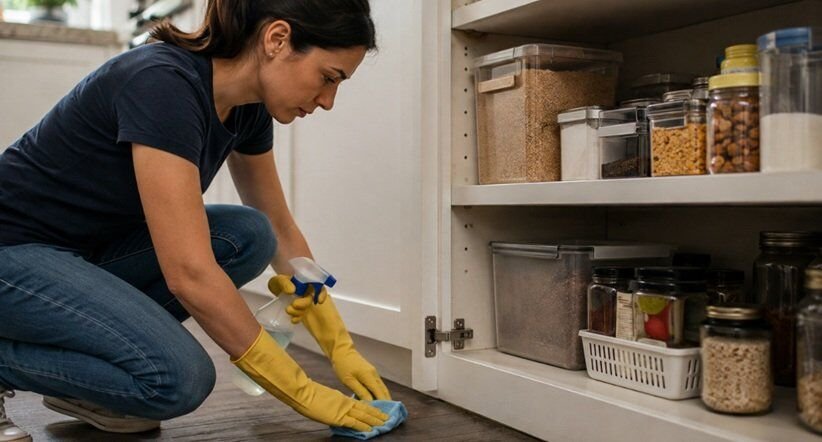
Late summer is a good time to give your home a deeper clean before fall. Kitchens, storage areas, damp spaces, and entry points can collect food, moisture, and clutter that attract or shelter pests. Here are the overlooked areas worth checking before cooler weather arrives.
Open windows, outdoor meals, and everyday household activity can leave behind moisture, crumbs, and clutter in places that are easy to miss. These conditions can make certain areas more attractive to insects and other pests.
Quick surface cleanings may not reach the quiet spaces where insects and rodents hide.
A deeper seasonal clean can uncover early signs of pest activity before fall.
Why Late Summer Is the Right Time For a Deep Clean
Late summer is a transition period. Warm days can keep bugs active, but cool nights can lead some pests to seek sheltered indoor spaces.
Deep cleanings help remove the three things pests love:
- Food: crumbs, grease, pet food, open packages
- Water: leaks, damp towels, standing moisture
- Shelter: clutter, cardboard, wall gaps, quiet corners
Cleaning these areas now can help steer bugs away. It also gives homeowners a chance to spot smaller infestations before they become much bigger problems.
1. Behind and Under Kitchen Appliances
Cleaning the kitchen is a good place to start. Bugs love to hang out behind and underneath appliances. Crumbs and spills often wind up in those hard-to-see spaces.
These dark areas can provide insects and rodents with the food and shelter they need to thrive.
Unplug small appliances before cleaning around them. Only move larger appliances when it’s safe to do so and vacuum loose debris. Wipe the floors and nearby walls with warm, soapy water. Clean out drip trays and check for leaks near water lines.
What to Look For
Watch for signs such as:
- Droppings or dark grease marks
- Shed insect skins
- Gnawed food packaging
- Live or dead bugs
- Gaps around pipes and outlets
Seal up small openings where possible.
Contact a qualified professional if an appliance is too heavy or connected to a gas line.
2. Pantry Corners and Forgotten Food
Pantries have a way of hiding pest activity even when the shelves appear clean.
Cereal boxes that aren’t properly sealed or spilled flour are the types of things that can quickly attract ants, roaches, and other pantry pests.
Remove everything from each shelf before cleaning. Check bags and boxes for holes or webbing. If any containers have unusual dust, toss them. Throw away compromised food and vacuum the corners before wiping down the shelves.
Tips to Reduce Future Problems
To prevent pantry problems from repeating:
- Store dry goods in sealed containers
- Keep pet food off the floor
- Clean spills as soon as they happen
- Avoid saving empty cardboard boxes
- Rotate older items toward the front
Pay close attention to rarely used shelves and spaces behind large containers.
3. Damp Areas Under Sinks and Near Drains
Pests enjoy gathering where there’s access to water. Look for leaky pipes and be wary of things like damp bath mats. Standing water can attract roaches, ants, silverfish, and other bugs.
Check under kitchen and bathroom sinks. Floor drains and around washing machines can also be prime real estate for slow leaks. Stains, mold, or a musty smell are all warning signs.
Quick Moisture Check
These adjustments can make a big difference:
- Fix dripping pipes and faucets
- Dry standing water right away
- Replace wet cardboard or shelf liners
- Improve airflow in damp rooms
- Keep stored items away from wet walls
Cleaning helps, but it’s more important to target moisture sources and fix them. Dry spaces are much less inviting for pests.
4. Closets, Cardboard Boxes, and Storage Spaces
Even quiet storage spaces can turn into bug havens if you aren’t careful. Think basements, attics, closets, or garages. Start by removing loose clutter from the floor.
Check behind storage bins. If you have clothing piles or old boxes, you’ll also want to check those. Cardboard can hold moisture and give pests a dark place to hide.
Make Your Storage Spaces Less Bug-Friendly
These steps can freshen up your storage spaces and keep the bugs and rodents out:
- Trade weakening cardboard boxes for sealable plastic bins
- Keep items off the floor wherever possible
- Vacuum corners and baseboards
- Toss old paper bags and unused packing material
- Check stored fabrics for holes or insect activity
Open spaces are much easier to clean and inspect throughout the year.
5. Entry Points and Items Brought Indoors
Late summer is the right time to check doors and windows for gaps that could provide easy entry. Replace torn screens or loose weatherstripping. Seal small gaps around pipes or cables.
Check Outdoor Items
Before storing anything for the winter, give it a good cleaning or inspection. Things like:
- Potted plants
- Patio cushions
- Outdoor toys
- Garden tools
- Storage bins
- Firewood
Vacuum window tracks and remove dead insects near doors. Keep your firewood away from the house and don’t bring in more than you need.
Signs Cleaning Alone May Not Be Enough
Deep cleaning can reduce food, moisture, and hiding places that attract or support pest activity, but it may not eliminate an established infestation. However, some warning signs may point to an active pest problem. Watch out for:
- Fresh droppings or gnaw marks
- Noticing live bugs during the day
- Damaged food packages
- Scratching sounds inside walls
- Strong or unusual odors
- Stubborn pests that come back after cleaning
For homeowners opting for a DIY pest control approach, first identify the pests. Choose a product made for that specific pest and location. Always follow the instructions carefully.
When to Call a Pest Professional
Cleaning and sealing entry points can help with prevention, but professional pest control may be appropriate when you repeatedly see live pests, find substantial droppings or nesting material, hear animals inside walls or ceilings, or cannot identify where the activity is coming from.
Late-Summer Deep Clean Checklist
Before fall arrives, make it a point to:
- Clean behind and underneath kitchen appliances safely
- Inspect pantry foods for holes, webbing, or signs of pests
- Store dry foods and pet food in sealed containers
- Check under sinks for leaks and moisture
- Clean drains and damp areas
- Remove unnecessary cardboard from storage areas
- Vacuum closets, garages, attics, and baseboards
- Inspect window screens and door seals
- Check outdoor items before bringing them indoors
- Look for droppings, gnaw marks, or other signs of pest activity
Take it one room at a time to make it more manageable.
Prepare Your Home Before Fall
Your home doesn’t have to be spotless to prevent pests. But it should remove their access to food, water, and shelter. Make sure easy entry points have been sealed.
A late-summer deep clean can reveal small problems before they become big ones.
You may also like to read,
- How to Keep Bugs Out of Your Garden Naturally: 6 Effective Chemical-Free Pest Control Tips
- Top Causes of Bed Bug Infestations and Effective Prevention Tips
- Saving Plants: 7 Tips and Strategies for Pest Management