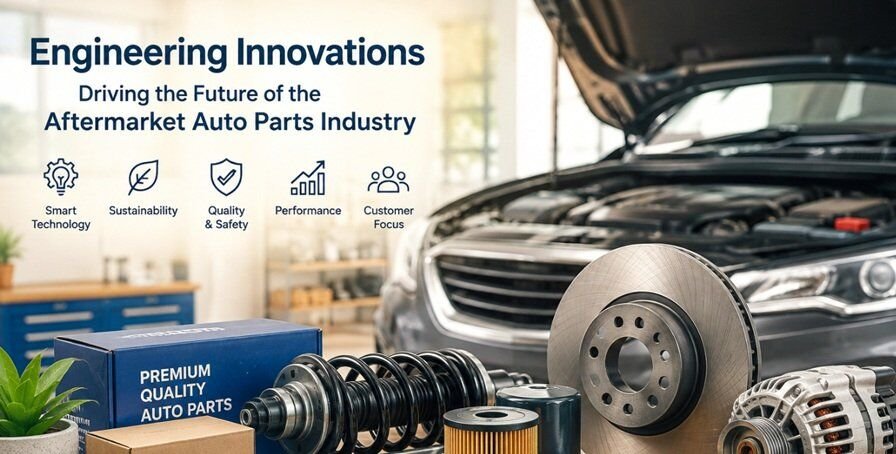
The aftermarket automotive parts industry is undergoing a profound transformation, driven by rapid technological advancements and evolving consumer demands. As vehicles become increasingly complex, replacement parts required to maintain, repair and upgrade them are also evolving.
Modern vehicles can provide enhanced efficiency, superior durability and seamless digital integration. This shift is pushing manufacturers and suppliers to adopt groundbreaking engineering techniques that can keep pace with a rapidly changing global market. Here, we explore the most important engineering innovations leading the future of the aftermarket auto parts industry.
3D Printing
One of the most revolutionary engineering advancements in the aftermarket auto parts space is the widespread adoption of 3D printing. This incredible technology has rapidly shifted from a niche prototyping tool to a mainstream production method because it can offer:
- Rapid iteration – Engineers can now design, test and refine new component designs in a matter of hours, rather than waiting weeks for traditional molds to be cast.
- On-demand customization – Highly customized parts can be created with 3D printing, tailored to specific vehicle modifications or driver preferences.
- Legacy part replacement – For classic and older vehicles where original manufacturing molds no longer exist, 3D printing provides a viable solution to accurately recreate obsolete components.
This technology reduces material waste and car maintenance costs, as well as significantly shortening supply chain times and minimizing warehouse inventory costs, allowing for localized, on-demand production of precise auto parts.
Artificial Intelligence and Predictive Analytics
AI is having a profound impact on how aftermarket parts are engineered and distributed. In the design phase, engineers utilize AI-driven generative design algorithms. By inputting specific constraints, such as weight limitations, material costs and load-bearing requirements, the software can automatically generate optimal designs, saving time and assisting with design ideation.
Highly sophisticated AI models using predictive analytics are able to analyze vast amounts of data to predict important business factors, such as when a part is likely to fail, or how much stock of each component to keep on hand at particular times. Predictive maintenance using AI can ensure parts are replaced just before they cause a breakdown, anticipating Range Rover engine problems for example. Furthermore, optimized stock management using AI can save companies money and allow them to operate more efficient business models.
Smart and Connected Components
As vehicles become smarter, the components that keep them running are frequently becoming embedded with micro-sensors that can track physical metrics in real-time. These smart components can communicate directly with the vehicle’s onboard computer and the driver’s smartphone, providing vital data on wear, temperature and overall integrity. For example, intelligent brake pads can proactively alert drivers when friction material is running low, while connected oil filters can monitor fluid degradation.
Advanced Materials Science in Manufacturing
Beyond how parts are manufactured, the actual raw materials used to construct them are undergoing an engineering renaissance, too. Historically, heavy steel and basic aluminium dominated the aftermarket auto parts industry, but the focus has shifted towards more high-performance composite materials and metals to craft high-quality performance car parts, including :
- Carbon fiber reinforced polymers (CFRP) – Once reserved exclusively for elite racing vehicles and aerospace, CFRP is becoming more accessible in the consumer aftermarket, offering unparalleled strength-to-weight ratios.
- Graphene – Engineers are actively experimenting with graphene-infused materials and coatings that could drastically improve cars by making them lighter, stronger, more heat-resistant, more energy-efficient, cheaper, and better at reducing friction and wear. CEO of Graphene@Manchester, James Baker, says: “You only need a very small amount of graphene to make a big difference. Probably less than 1% graphene into a resin or into a foam or into a rubber to make that double-digit benefit.”
- Titanium alloys – For high-stress applications like exhaust systems and performance suspension springs, titanium offers exceptional corrosion resistance and durability while shedding critical vehicle weight.
Eco-Friendly Engineering and Sustainability
Sustainability has firmly established itself as a central pillar of the automotive aftermarket industry. With global initiatives pushing towards reducing carbon footprints, production methods and material choices are becoming more eco-friendly.
Engineers are increasingly utilizing recycled plastics, bio-based composites and lightweight alloys that reduce the environmental impact of manufacturing. Additionally, the remanufacturing of components, where used parts are meticulously rebuilt to equal or exceed original specifications, is gaining immense traction.
The reuse of parts and circular economy practices are now critical considerations for businesses looking to appeal to environmentally conscious consumers. The aftermarket auto parts industry is a prime example of this; while new car sales are slowing down globally, the automotive aftermarket is expected to become a trillion dollar industry by 2035.
Electric Vehicle Compatibility
The steady rise in vehicle electrification presents both a challenge and a massive opportunity to the aftermarket sector. While EVs (Electric Vehicles) generally possess fewer moving mechanical parts than traditional internal combustion engine (ICE) vehicles, they require highly specialized, technologically advanced aftermarket components, such as:
- Battery thermal management – Aftermarket engineers are developing advanced liquid cooling systems and heat sinks to optimize EV battery life and charging performance.
- High-voltage hardware – Upgraded electrical harnesses, inverters and specialized safety disconnects are becoming essential aftermarket items.
- Aerodynamic enhancements – Because EV range is heavily dependent on wind resistance, aftermarket suppliers are creating specialized body kits and lightweight aerodynamic wheels specifically designed to reduce drag.
As the transition to EVs continues, vehicle repairs increasingly require advanced technical knowledge, making the shortage of qualified automotive professionals one of the biggest challenges in the modern aftermarket. Investing in skills, training and education is one of the best things the aftermarket automotive parts industry can do to keep up with the increasing electrification of vehicles.
Nano-Coatings
Nano-coatings on car parts create hard, long-lasting, water-repellent shields by filling tiny gaps with microscopic particles. They are made of liquid polymers that bond to the surface, protecting parts from corrosion, heat and excessive wear, and improving how components perform without adding any noticeable weight or bulk. They’re especially useful on exhaust systems, braking parts, suspension components and exterior paintwork that faces constant exposure to moisture, salt and high temperatures.
By reducing surface friction and resisting damage from contaminants, nano-coatings can help parts last longer and maintain a more consistent performance. They also support a cleaner, more efficient finish, which can be useful for both functional and aesthetic upgrades. For aftermarket brands, this technology offers a practical way to create more durable components that appeal to drivers looking for longer service life and better protection.
You may also like to read,
- The Impact of Engineers on Modern Society and Technological Advancement
- AI Engineer: Step By Step Approach to Become One
- The Evolution of the Car Mechanic Industry: From Traditional Garages to the Digital Era
- How to Hire Software Engineers: A Complete Recruiting Guide