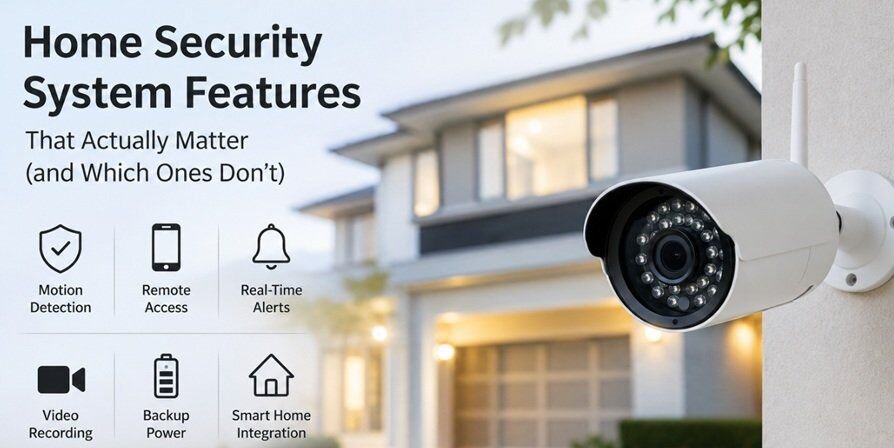
When purchasing a home security system, the options can be daunting. Modern home security systems promise AI detection, smart home integration, and dozens of advanced features. But more features do not always mean better protection. Many homeowners end up paying for technology they rarely use while overlooking the features that genuinely improve security. This guide explains which home security features deserve your attention, which are optional, and which are mostly marketing.
Buying a home security system with a lot of features sounds appealing, but features alone won’t keep your home secure. A security system is considered effective if it can keep a home safe from intrusions, identify threats, and assess the situation. It’s the right features, not the most features, that truly make the difference.
This guide will help you identify the various features that you can forego and the ones you should actually consider.
Why Choosing the Right Features Matters
Home security is more than installing cameras or setting a security alarm before leaving the house. An effective home security system must work during an unexpected power outage, internet interruptions, and even false alarms.
Choosing the right features offers several long-term benefits:
- Better protection for your family and belongings
- Faster response during emergencies
- Fewer false alarms and unnecessary notifications
- Easier day-to-day use
- Better value without overspending on features you’ll never need
Start with the Features That Matter Most
Rather than chasing the newest technology, focus on the core elements that support effective home security.
Reliable Door and Window Sensors
This is generally supported by crime prevention guidance, but avoid stating it as an absolute fact unless cited. Quality contact sensors can help detect unauthorized entry and trigger alerts.
These sensors are a key part of many effective security systems, making them one of the first features to prioritize. Therefore, implementing an electronic door access system can improve security in your property.
Motion Detection That Works Intelligently
This is one of the most essential features of indoor security. With modern sensors that can tell the difference between a person and a household pet, most false alarms can be significantly reduced, while sensors that truly detect a threat are also being developed.
Mobile Alerts and Remote Access
A good security system should keep you informed no matter the location. You should be able to receive notifications instantly, arm and disarm the system, and view the security cameras all from your phone.
This remote access is great during travel and offers peace of mind.
High-Quality Security Cameras
Focus on cameras that provide clear HD or higher resolution, night vision, wide viewing angles, motion recording, and two-way audio wherever useful.
- Clear HD or higher resolution
- Night vision
- Wide viewing angles
- Motion recording
- Two-way audio wherever useful
Backup Power and Cellular Connectivity
Security systems should function during outages and power interruptions. These systems should have battery backup and cellular communication.
Features That Are Nice to Have, But Not Essential
Some features certainly add convenience, but they shouldn’t influence your buying decision unless they genuinely fit your lifestyle.
Extensive Smart Home Integrations
Connecting your security system to lights, voice assistants, thermostats, and other smart devices can be convenient.
However, if your primary goal is home protection, these integrations don’t necessarily improve security. They should be viewed as optional conveniences rather than must-have features.
Multiple Camera Feeds
Some people think they need to cover every room with a security camera. In reality, cameras should focus on entrances, garages, driveways, backyards, and other vulnerable access points. Covering every room can strain your budget without adding to your home’s security.
Home Security System Features
After the security system is installed, most people use only a small number of the available automation features. Because of this, homeowners prefer a system that is easy to use and manage compared to one that is extremely complex.
Features That Often Sound Impressive, But Add Little Real Value
Marketing materials frequently highlight features that look impressive but have limited practical benefits.
For example:
- Excessive numbers of notification options that quickly become overwhelming
- Proprietary accessories that increase long-term costs
- Unnecessary premium subscriptions for features you’ll rarely use
- Decorative hardware upgrades marketed as security improvements
If a feature doesn’t improve detection, monitoring, response, or reliability, it’s probably not worth paying extra for.
A Simple Framework for Evaluating Any Home Security System
Instead of comparing brands feature by feature, ask yourself these five practical questions:
Does it detect threats quickly?
The system should immediately recognize unauthorized entry or suspicious activity.
Will it continue working during outages?
Battery backup and alternative communication methods greatly improve reliability.
Is it easy to use every day?
Complicated systems often lead homeowners to disable important functions or stop using them altogether.
Can it grow with my needs?
When comparing security systems, check if they offer extra sensors or cameras.
This would allow you to expand your system to meet your needs over time.
Am I paying for protection or marketing?
When comparing systems, prioritize those that often provide more value to the consumer and less to the marketers. This helps you avoid sorting through long, complex security system features.
Common Buying Mistakes to Avoid
Many people unintentionally purchase home security systems that reduce their overall effectiveness due to poor buying decisions.
Homeowners mostly check the camera quality while neglecting entry sensor quality. Some people consider only cameras and entry sensors when determining the quality and/or cost of a home security system. Still other people purchase the least expensive system to save money.
Updating the entry sensor system passwords, reviewing sensor alerts, and testing the system regularly are equally necessary. The most sophisticated home security system will not function effectively if it is not properly maintained.
A carefully selected home security system that is mid-priced with high-quality core functions will most likely provide better safety and protection than an expensive system that is overly complicated and not needed.
Final Thoughts
A home security system is an investment in your family’s safety, so it’s worth taking the time to choose one that matches your home’s layout, daily routine, and security needs.
Before making your final decision, keep this simple checklist in mind:
- Instead of chasing superficial features, focus on the protection it provides.
- The home security system should be usable by all family members.
- The system should have reliable backup in case of an outage.
- Integration of the system should be considered based on personal needs.
- When evaluating the overall cost, consider the overall value it provides, and not just the number of features it offers.
The best home security system isn’t the one with the longest feature list—it’s the one that reliably detects threats, continues working during emergencies, and is simple enough that your family will use it consistently. By focusing on core security features instead of marketing extras, you can protect your home while avoiding unnecessary costs.
You may also like to read
- CCTV Services: Enhancing Security in a Modern World
- Strategies for Maintaining Security with Construction Site Cameras