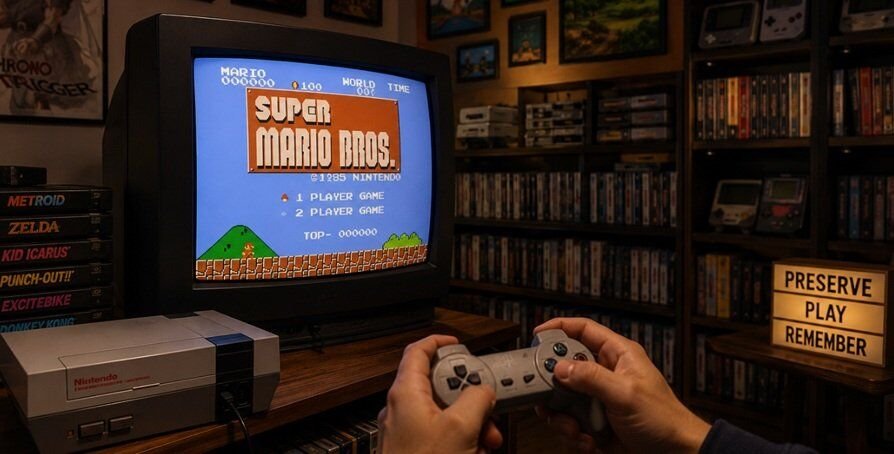
Video games have become one of the most influential forms of entertainment in the world. From pixel-based arcade classics to modern open-world adventures, games have shaped cultures, inspired creativity, and connected millions of players across generations. Yet, despite their cultural significance, many games are disappearing due to outdated hardware, discontinued online services, lost source code, and licensing issues.
Unlike books or films, video games depend on technology that evolves rapidly. Consoles become obsolete, digital storefronts shut down, and online-only titles can become completely inaccessible. Without active preservation efforts, future generations could lose access to important pieces of gaming history.
Game preservation is about more than nostalgia. It ensures that future players, developers, researchers, and historians can experience and learn from the games that defined different eras. As the gaming industry continues to grow, preserving its legacy has become more important than ever.
Video Games Are Part of Our Cultural History
Every generation has entertainment that reflects its time. Books capture ideas, movies document storytelling trends, and music represents cultural movements. Video games deserve the same recognition because they combine art, technology, storytelling, music, and player interaction in unique ways.
Communities and online platforms that celebrate gaming history help keep classic titles relevant by introducing players to both modern releases and timeless classics. Hypackel, for example, features gaming content that helps players discover new and classic gaming experiences while contributing to broader discussions around gaming culture.
Classic games showcase how developers solved technical limitations with creative design. Early platformers, role-playing games, and strategy titles introduced mechanics that still influence today’s biggest releases. Studying these games allows developers to understand the foundations of modern game design while helping players appreciate how far the industry has come.
Without preservation, many groundbreaking titles could disappear, leaving gaps in gaming history that future generations may never fully understand.
Digital Games Are More Fragile Than Many People Realize
Many players assume that buying a digital game means they will own it forever. Unfortunately, that is not always the case.
Digital storefronts regularly remove games because of expired licenses, publisher decisions, or legal disputes. Once a game is delisted, new players may never have the opportunity to purchase it legally.
Online-only games face an even greater challenge. When developers shut down servers, the entire game can become unplayable regardless of how much players invested in it. This has happened with numerous multiplayer titles over the years, leaving only videos, screenshots, and memories behind.
Hardware also creates preservation challenges. Older consoles eventually fail, replacement parts become rare, and physical discs or cartridges deteriorate over time. Without preservation initiatives, many games risk becoming impossible to experience in their original form.
Preserving Games Supports Education and Research
Game preservation benefits more than collectors and enthusiasts. It also provides valuable resources for education and academic research.
Students studying game design can analyze how mechanics evolved across decades. Historians can explore how games reflected social issues, technology, and popular culture during different periods. Programmers can examine older development techniques that continue to influence modern software engineering.
Universities increasingly recognize video games as an important academic subject. Preserved games allow researchers to document industry trends, artistic innovation, and technological breakthroughs that shaped interactive entertainment.
Future developers can also learn from both the successes and mistakes of earlier games, leading to stronger, more innovative creations.
Preserving Creativity Inspires Future Developers
Many successful game developers credit classic titles as the inspiration behind their careers.
Modern indie games often borrow ideas from retro platformers, pixel-art adventures, turn-based RPGs, and arcade shooters. These older games continue to influence visual styles, gameplay systems, and storytelling techniques decades after their original release.
When future creators have access to gaming history, they gain opportunities to experiment with proven concepts while introducing fresh ideas.
Without preserved classics, developers may lose valuable references that demonstrate how innovative mechanics evolved. Preserving games ensures that creativity continues to build upon the achievements of previous generations instead of repeatedly reinventing the wheel.
Preservation Protects Gaming Communities
Games are more than software; they create communities.
Players build friendships, share strategies, create fan art, write guides, speedrun competitions, and organize tournaments around their favorite titles. These communities often continue long after official developer support ends.
Preservation includes protecting more than the game itself. It also involves saving documentation, manuals, artwork, development notes, soundtracks, community mods, and even player-created content that helps tell the complete story of a game’s impact.
These resources help future generations understand not only how games were played but also how they influenced millions of people around the world.
The Role of Emulation and Archives
Emulation has become one of the most important tools in game preservation.
An emulator allows modern hardware to simulate older gaming systems, making classic titles playable without requiring original consoles. Museums, educational institutions, and preservation organizations often use emulation to study gaming history while protecting aging hardware from further damage.
Digital archives also play an important role by collecting screenshots, manuals, promotional materials, interviews, and development documentation that may otherwise be lost forever.
Of course, preservation should always respect intellectual property rights. Many organizations work directly with developers and publishers to legally preserve games while protecting creators’ rights.
Why Developers and Publishers Should Care
Game preservation is not only beneficial for players, but it also offers long-term value for developers and publishers.
Remasters, remakes, anniversary editions, and retro collections have proven that players remain interested in classic games. Companies can generate new revenue by preserving older titles and making them accessible on modern platforms.
Preservation also strengthens a company’s legacy. A well-maintained game library showcases decades of creativity while allowing new audiences to discover iconic franchises.
When source code, design documents, and development assets are carefully archived, future updates and remasters become much easier to produce.
What Players Can Do to Support Preservation
Every gamer can contribute to preserving gaming history.
Some simple ways include:
- Support official re-releases of classic games.
- Purchase games through legitimate platforms whenever possible.
- Back preservation projects, museums, and gaming archives.
- Keep physical games, manuals, and packaging in good condition.
- Share gaming history with younger players.
- Document gameplay, community stories, and historical information.
- Encourage developers to make older titles available on modern systems.
Small actions from millions of players collectively help preserve gaming’s rich history for years to come.
Looking Ahead
The gaming industry continues to evolve with cloud gaming, digital-only releases, subscription services, and live-service experiences. While these innovations create exciting opportunities, they also introduce new preservation challenges.
Future generations deserve the opportunity to experience the games that influenced today’s developers, entertained millions of players, and shaped modern interactive storytelling. Preserving games ensures that important artistic achievements are not lost simply because technology moves forward.
Just as libraries preserve books and museums protect historical artifacts, the gaming industry must continue investing in preserving its interactive heritage. Every saved game becomes a valuable record of creativity, innovation, and culture that future players can explore, study, and enjoy.
Conclusion
Game preservation is about protecting more than entertainment; it is about safeguarding a significant part of digital culture. Every classic title represents a moment in gaming history, showcasing the creativity, technology, and imagination of its time. As hardware ages and digital services evolve, preserving these experiences becomes increasingly important.
By supporting preservation efforts, encouraging legal access to classic games, and recognizing video games as cultural works worthy of protection, we can ensure that future generations experience the same groundbreaking adventures that inspired millions of players worldwide. Gaming’s past has shaped its present, and preserving it will help define its future.
You may also like to read,
- The Rise of Mobile Gaming: How It’s Shaping the Industry
- How to be an Active Parent in Your Child’s Speech Therapy
- Essential Travel Tips for Large Families Planning a Stress-Free Vacation